
How to Avoid Plagiarism in 2026: 10 Proven, Integrity-First Strategies
Plagiarism catches most students by surprise — not because they intended to steal ideas, but because the line between engaging with sources and over-relying on them is genuinely blurry. In 2026, that line has shifted again: universities now scrutinise AI-generated text alongside verbatim copying, and what counted as careful paraphrasing a few years ago may now trigger a flag. Understanding how to avoid plagiarism is no longer just about citing your sources correctly; it is about developing the academic voice and research habits that make originality a natural outcome of your process, not a last-minute scramble.
This guide breaks the issue into ten concrete, integrity-first strategies — from the moment you open a source to the final check before you hit submit. Each strategy addresses what academic integrity offices at universities across the UK, US, Canada, and Australia consistently identify as the root causes of plagiarism cases: rushed note-taking, weak paraphrasing habits, missing citations, and misuse of AI writing tools.
What counts as plagiarism in 2026
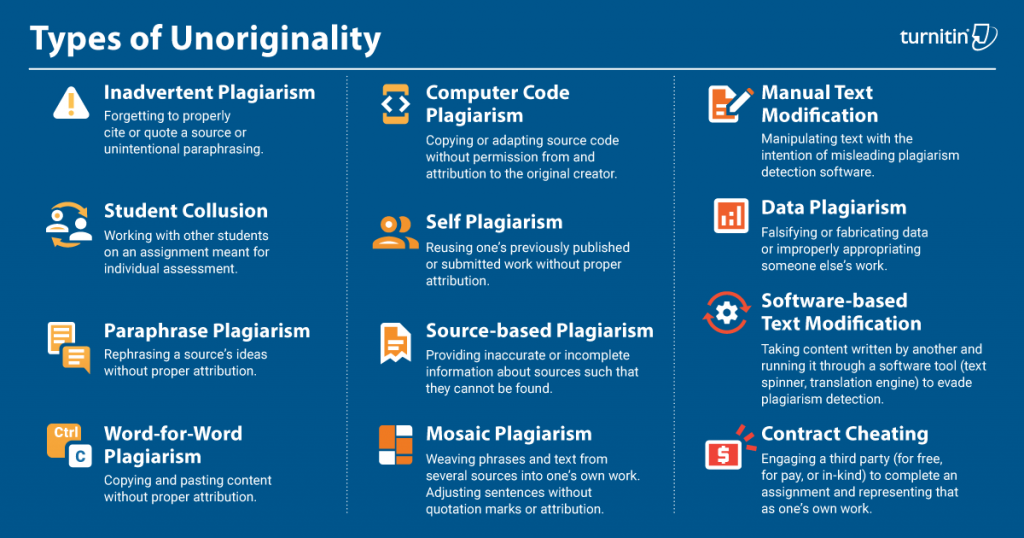
Most academic integrity policies define plagiarism as presenting someone else’s words, ideas, data, or creative work as your own without appropriate attribution. In practice, this covers a wider range of behaviours than students typically expect:
- Verbatim copying — lifting sentences or paragraphs word-for-word without quotation marks and a citation
- Patchwriting — rearranging or lightly rewording source text while keeping the underlying structure intact
- Idea plagiarism — using someone’s argument or original concept without acknowledging them, even if your phrasing is entirely different
- Data and image plagiarism — using graphs, tables, images, or datasets without crediting the original source
- Self-plagiarism — resubmitting your own previously marked work, or recycling significant passages between assignments without permission
- AI content without disclosure — submitting AI-generated text in contexts where your institution requires disclosure or prohibits AI use entirely
The last category is the most consequential new addition. University integrity policies have evolved rapidly; many institutions now treat undisclosed AI use under the same framework as plagiarism. The underlying principle is the same in both cases: the work submitted must honestly represent your own intellectual effort.
1. Understand the types of plagiarism first
You cannot avoid something you do not recognise. Before you write a single word, read your institution’s academic integrity policy — not just the definition of plagiarism, but the examples provided. Pay particular attention to patchwriting: many students genuinely believe they have paraphrased correctly when they have only shuffled sentence elements and changed a handful of words. Academic integrity offices at institutions including the University of Washington and Northern Illinois University explicitly identify patchwriting as one of the most common and least-understood violations, precisely because students who commit it often believe they have done the work of paraphrasing.
Once you know what the policy covers, read a few published examples of correct and incorrect paraphrasing. The contrast is almost always more instructive than any abstract definition.
2. Take source-attributed notes from the start
The most common root cause of accidental plagiarism is messy note-taking. Students read a source, jot down ideas, close the tab, and later cannot distinguish which phrases are theirs and which belong to the author. By the time they are writing under deadline pressure, unattributed source text flows into their draft without any awareness that it originated elsewhere.
The fix is straightforward: mark every note with its source at the moment you write it. A consistent format — even a parenthetical at the end of a note is sufficient. If you copy a sentence verbatim because it is particularly well-phrased, put it in quotation marks in your notes immediately, with the page number or URL. When you return to those notes during drafting, the attribution is already in place.
Reference management tools such as Zotero and Mendeley let you capture source metadata automatically. The built-in citation tools in Tesify’s AI thesis writer integrate this step directly into the writing workflow, removing the most error-prone manual step.
3. Master the paraphrase — not just synonym swapping
Genuine paraphrasing means reading a passage, closing your notes, and writing the idea from your own comprehension — then returning to the original to check you have accurately represented it. It is not about replacing words with synonyms or flipping sentence structure. Those approaches (sometimes called thesaurus plagiarism or patchwriting) produce text that is structurally and semantically identical to the source, which both human markers and similarity-checking tools will identify as insufficiently original.
Effective paraphrase also means integrating the idea into your own argument. Ask yourself: why does this source matter to my thesis? What does it prove, complicate, or extend? Writing from that analytical position produces text that is genuinely yours, even though it draws on someone else’s research.
For step-by-step techniques with before-and-after examples from real academic texts, the guide to how to paraphrase academically on Tesify is a practical companion to this article.
4. Always cite, even when paraphrasing
A persistent misconception is that paraphrasing removes the need for a citation. It does not. You must cite the source of an idea whether you quote it directly, paraphrase it, or summarise a longer argument in a sentence or two. The citation signals to your reader that you encountered this idea in someone else’s work — an act of intellectual honesty, not an admission of weakness.
The practical rule is simple: if you could not have known this fact, argument, or data point without reading that specific source, it needs a citation. The only exceptions are common knowledge (widely established facts that do not originate from any particular source) and your own original analysis.
5. Use direct quotations sparingly and correctly
Direct quotations serve a specific function in academic writing: they preserve a formulation so precise or distinctive that paraphrasing would lose something meaningful. They are not a shortcut for engaging with a source. Relying heavily on quotations signals that you have not yet developed the confidence to synthesise sources — and many markers will note this explicitly in their feedback.
When you do quote directly:
- Use quotation marks for anything shorter than three or four lines
- Use an indented block format for longer passages (the threshold varies by style — check APA 7, MLA 9, or Chicago 17 as appropriate for your discipline)
- Always include the author, year, and page number — or paragraph number for online sources without pagination
- Introduce the quotation in your own words and follow it with your own analysis; a quotation should never be left to speak for itself
6. Build your reference list as you write
Leaving your bibliography for the end of the project is one of the surest routes to citation errors and missing references. When you cite a source in your draft, add it to your reference list immediately. This way you never face the frustrating reverse-engineering task of tracking down a paper you read weeks ago when all you have is a vague memory of its argument.
Use a consistent citation style throughout. If your department specifies APA 7, apply it from your first draft. Switching citation styles at the end is time-consuming and introduces errors. If your institution permits it, a reference manager such as Zotero or the bibliography tools built into AI thesis writing platforms like Tesify can format citations automatically and maintain consistency across every chapter.
7. Watch out for self-plagiarism
Self-plagiarism — also called autoplagiarism or text recycling — occurs when you reuse substantial portions of your own previously assessed work without disclosure. Most universities treat this as a form of academic misconduct because it misrepresents the effort invested in the current assignment: you are submitting work you have already been credited for.
This matters most in research contexts where you might revisit similar topics across multiple papers or thesis chapters. If you want to build on your own prior work, the accepted practice is to cite yourself in the third person, as you would any other source, and to verify your institution’s policy on text recycling. Some allow limited reuse of a methods section with disclosure; many do not allow reuse of analysis or findings without explicit permission.
8. Use AI writing tools responsibly
AI writing assistants have become a standard part of student workflows in 2026. Understanding how to avoid plagiarism now necessarily includes understanding how to use these tools without running into integrity issues.
The core principle is transparency: check what your institution allows, disclose what you used, and ensure the ideas and argument remain yours. Specifically:
- Do not submit AI-generated text as your own work in any context where your institution requires original composition — which covers most assessed writing.
- Do use AI tools for permitted tasks: brainstorming, generating outlines, checking grammar, formatting references, or identifying gaps in your literature review.
- Cite AI-generated content where your style guide allows. APA 7 and MLA 9 both provide guidance on citing AI tools.
- Maintain authorial control: every claim, argument, or data point in your final submission should be something you have verified and can defend in a viva or seminar discussion.
Tesify is designed for responsible integration into academic workflows: it structures your thesis chapters, suggests argument frameworks, and formats your bibliography — while keeping the intellectual content of your argument firmly in your hands.
9. Run a pre-submission originality check
An originality check is not about gaming a detection system — it is a quality-control step that catches errors you would want to correct anyway. Running your draft through a similarity checker before submission frequently reveals:
- Passages where you quoted text but forgot to add quotation marks
- Sections where your paraphrase sits closer to the source than you realised
- Missing citations on passages you were certain you had covered
- Accidental duplication of phrasing from an earlier assignment
Read the similarity report carefully rather than reacting to the headline percentage. A high score often reflects your bibliography (which is expected to match other sources) and common discipline-specific terminology. The relevant question is whether any flagged passage represents a genuine attribution gap — and if so, fix it before the submission deadline, not after.
Tesify includes an originality self-check within its thesis workflow, giving you actionable feedback on problematic passages before you submit.
10. Build your own academic voice over time
The deepest protection against plagiarism is not a checklist — it is the development of your own scholarly voice. When you have something genuine to say about a topic, when you understand the literature well enough to argue with it rather than merely summarise it, paraphrasing and citation feel natural rather than burdensome. The temptation to lean on source text diminishes because you have your own perspective to express.
This takes time and intentional practice. Read widely in your field, write regularly, seek feedback on drafts. Every piece of writing that goes through revision builds the habit of expressing ideas in your own language. The goal is not merely to avoid academic misconduct; it is to become a writer whose reasoning is recognisably your own.
Your 2026 checklist: how to avoid plagiarism
Before you submit any piece of assessed work, run through these questions:
| Stage | Check |
|---|---|
| Research | Every note is tagged with its source and page/URL. |
| Drafting | All paraphrases restructure the idea, not just the wording. |
| Citation | Every non-original fact, argument, and data point has a citation — including paraphrased content. |
| Quotations | All verbatim text is in quotation marks with author, year, and page. |
| AI use | Any AI assistance is disclosed per your institution’s policy and cited where required. |
| Self-plagiarism | No previously assessed content has been recycled without disclosure. |
| Pre-submission | Originality check completed and all genuine attribution gaps resolved. |
Frequently Asked Questions
Does paraphrasing count as plagiarism if I cite the source?
No — correct paraphrasing with a citation is the standard method for incorporating sources and does not constitute plagiarism. The key is that the paraphrase must genuinely re-express the idea in your own words and sentence structure, not merely replace individual words with synonyms while preserving the original phrasing (known as patchwriting). Patchwriting with a citation can still be flagged as a form of plagiarism by many institutions.
Is using AI to help write my thesis plagiarism?
It depends on your institution’s current policy and how you use the tool. Using AI for brainstorming, outlining, grammar checks, or reference formatting is permitted at many universities. Submitting AI-generated text as your own original analysis typically is not, especially for assessed work where independent reasoning is the point of the assessment. Always check your institution’s latest AI use policy, disclose any AI assistance required by that policy, and cite AI tools where your citation style provides guidance.
Can I plagiarise myself?
Yes. Self-plagiarism (also called autoplagiarism or text recycling) means reusing substantial portions of your own previously assessed or published work without disclosure. Most universities treat it as a form of academic misconduct because it misrepresents the effort you have invested in the current assignment. If you want to build on prior work, cite yourself as you would any other author and check your institution’s policy on permissible text recycling.
What similarity percentage is acceptable for my thesis?
There is no universal threshold that applies across all institutions and disciplines. Most universities do not set a single acceptable percentage; instead, assessors review the similarity report qualitatively to determine whether flagged passages represent genuine attribution failures. A high percentage can be entirely acceptable if the matches are confined to your bibliography, standard discipline-specific phrases, or correctly quoted and attributed text. Focus on resolving genuine attribution gaps rather than optimising a percentage score.
Do I need to cite common knowledge?
No — common knowledge (widely established facts that are not original to any particular source, such as the date of a well-known historical event) does not need a citation. The practical test is: would a reasonable reader in your discipline expect a source here? If the fact is something you could only know by reading a specific piece of research, it needs a citation. When in doubt, err on the side of citing.
How do I cite AI-generated content in APA 7?
APA 7 guidance recommends treating AI tools similarly to software: cite the tool name, developer, year, and a description of the content generated. For example: OpenAI. (2026). ChatGPT (GPT-4o) [Large language model]. https://chatgpt.com. Include in-text citations where relevant. Many institutions have supplemented APA guidance with their own AI disclosure requirements — always check your university’s specific policy alongside the style guide.
Write with integrity — and a tool built for it
Good academic habits take time to build, but the right tools make every step easier. Tesify is an AI thesis assistant designed for integrity-first academic writing: it helps you structure your argument, format your bibliography correctly in APA, MLA, Harvard, Chicago, or Vancouver, and run an originality self-check before you submit — so you can focus on the scholarship, not the administration.