
Graduate Student Mental Health Statistics 2026: Depression, Anxiety & Burnout Data by Field
Nearly four in ten doctoral and master’s students worldwide meet screening criteria for moderate-to-severe depression — a rate that researchers publishing in Nature Biotechnology in 2018 described as evidence of a mental health crisis. Drawing on responses from 2,279 graduate students across 26 nations, that survey established the benchmark against which subsequent research has been measured. Graduate student mental health statistics compiled since have not told a fundamentally different story: updated data from the Healthy Minds Study’s 2024–25 cycle, based on more than 84,000 students at 135 U.S. institutions, still places moderate-to-severe depressive symptoms at 37%. A population under substantial psychological strain, and a higher-education system that has been slow to respond at scale.
This roundup collects the most rigorously sourced data available on depression, anxiety, and burnout among master’s and PhD students, with field-by-field breakdowns where the evidence allows, international comparisons, help-seeking rates, and the structural drivers that researchers consistently identify as root causes. For a complementary statistical profile focused specifically on doctoral wellbeing, the PhD student mental health statistics roundup from Tesify’s research hub provides additional breakdowns. Every figure in this article traces directly to a named study or national report.
Across multiple large-scale surveys, roughly 40% of graduate students screen positive for moderate-to-severe anxiety or depression — rates more than six times higher than the general population, according to Evans et al. (2018, Nature Biotechnology). Burnout affects an estimated half of all doctoral trainees, and the majority of those experiencing symptoms do not receive professional mental health support.
Depression Among Graduate Students
Three independent data sources, using different instruments and populations, converge on broadly similar estimates of depression prevalence among graduate students.
| Study / Source | Year | Sample | Depression Rate |
|---|---|---|---|
| Evans et al., Nature Biotechnology | 2018 | 2,279 grad students, 26 countries | 39% moderate-to-severe |
| Systematic review & meta-analysis, Scientific Reports | 2021 | 23,469 PhD students, 16 studies | 24% pooled prevalence |
| Healthy Minds Study | 2024–25 | 84,000+ students, 135 U.S. institutions | 37% moderate-to-severe |
The 24–39% range across these sources reflects genuine methodological variation: the 2021 Scientific Reports meta-analysis required clinically significant symptom thresholds across multiple validated tools, while the Evans et al. survey used the PHQ-9 scale with a moderate-to-severe cut-off, and the Healthy Minds Study combines undergraduate and graduate respondents. All three, however, confirm that graduate-level depression rates substantially exceed those found in the age-matched general population.
The Healthy Minds Study 2024–25 shows some improvement: severe depression symptoms specifically fell to 18%, down from 23% in 2022 — the third consecutive annual decline. Suicidal ideation tracked downward similarly, dropping to 11% of surveyed students from 15% in 2022. The trend is real but the base rates remain high. Doctoral training duration compounds risk independently: research on disruption during PhD studies published in PLOS ONE (2023) found that students in longer programs accumulated cumulative stress exposures that worsened baseline depression vulnerability — a dynamic our data overview on PhD completion times by country and field puts in context.
Anxiety Rates in Graduate Education
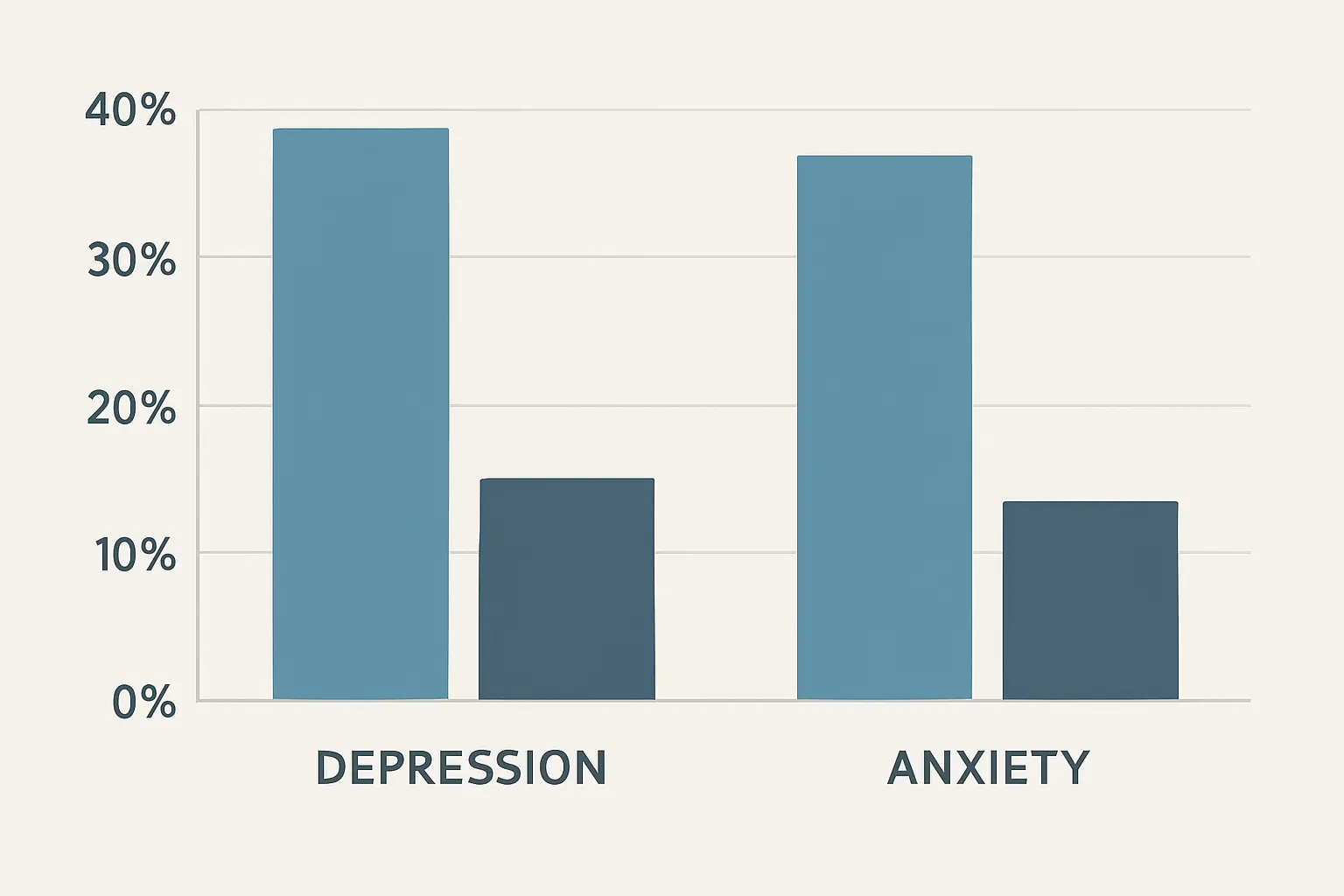
In the Evans et al. (2018) survey, 41% of respondents scored in the moderate-to-severe range on the GAD-7 anxiety scale — one of the first large-scale, cross-national measurements of graduate student anxiety using a clinically validated instrument. That same study found that graduate students were more than six times as likely to experience anxiety and depression compared with the general population, a figure that has since been replicated in national Canadian data.
“Graduate students are more than six times as likely to experience depression and anxiety as compared to the general population.”
— Evans et al., Nature Biotechnology, 2018 (2,279 students, 26 countries)
The 2021 Scientific Reports meta-analysis — which pooled data from 16 studies covering 23,469 PhD students — estimated a pooled anxiety prevalence of 17%, applying stricter clinical thresholds. The Healthy Minds Study 2024–25 reports 32% of surveyed students with moderate-to-severe anxiety, down from 37% in 2022. The range (17–41%) is wide because researchers are measuring different things: point-in-time disorder criteria, standardised screening scores, and self-reported symptom severity all produce different numbers from the same underlying population.
A 2022–23 global systematic review published in Frontiers in Public Health specifically on anxiety prevalence among graduate students found significant heterogeneity across countries and measurement tools, and noted that reported rates have trended upward over time, with the steepest increases observed in data collected from 2020 onward — consistent with the COVID-19 pandemic as an amplifying event on a pre-existing trend.
Burnout and Dropout Risk
Burnout — characterised by emotional exhaustion, depersonalisation toward academic work, and a reduced sense of personal accomplishment — is the mental health dimension most directly linked to doctoral attrition. Research consistently shows it is associated with active dropout consideration, which our PhD dropout rate and completion statistics roundup documents in detail across fields and countries.
A rigorously designed pilot study of biomedical doctoral students at a U.S. research university, published in CBE—Life Sciences Education (2019), provides some of the most granular institutional data available:
- 52.2% of participants met diagnostic criteria for at least one current psychiatric disorder
- 31.9% had a current anxiety disorder
- 14.5% had a current mood disorder
- 66.7% had experienced at least one psychiatric disorder over their lifetime — compared to 52.4% in a same-age general population sample
- 60.9% reported fleeting thoughts about dropping out of their program
- 8.7% were actively considering leaving
- Only 30.4% reported no thoughts at all of leaving
The 60.9% figure — more than three in five doctoral students experiencing at least passing thoughts of quitting — is among the most cited in institutional mental health discussions, because it maps directly to the research on PhD attrition rates. Burnout was significantly associated with active dropout consideration in the same study, independently of research progress metrics.
Broader estimates, drawn from survey-based research across multiple program types, suggest that up to 50% of graduate students report experiencing symptoms consistent with depression, anxiety, or burnout during their training. That figure is a ceiling rather than a precise estimate, but it is consistent across reviews published in both clinical and higher-education literature.
Mental Health by Discipline
Field-specific comparison data remains the weakest part of the evidence base. Biomedical and health science doctoral programs have been studied far more intensively than social science, humanities, or engineering cohorts, which creates a systematic publication bias toward those populations in the literature.
| Field | Finding | Source |
|---|---|---|
| Biomedical sciences | 52.2% with at least one current psychiatric disorder; 60.9% with dropout thoughts | CBE—Life Sciences Education, 2019 |
| Healthcare graduate programs (medical, osteopathic, nursing) | Burnout prevalence 21–55% depending on year of training; exceeds age-matched general population | Scoping review, BMC Medical Education, 2017 |
| Economics PhD (top-ranked U.S. programs) | 18% moderate-to-severe depression or anxiety; 11% suicidal ideation in prior two weeks | Barreira et al., Journal of Economic Literature, 2018 |
| STEM broadly | Competitive lab cultures, unclear progress benchmarks, and funding cycles identified as structural stressors correlated with burnout | ACS Polymers Au, 2022 |
The healthcare scoping review, which analysed 27 studies published between 2006 and 2015, found that burnout increased progressively with program year: 21% of first-year medical students met burnout criteria, rising to 43% by the third year. Crucially, medical students were significantly less likely to seek professional mental health help than the general population — 26.9% said they would seek professional help for a mental health issue, compared to 44.3% of the general population.
Humanities and social science doctoral students are studied less systematically, but the structural picture is clear: longer median time-to-degree, lower average stipends (or none at all), and academic job markets that have contracted sharply over the past fifteen years create a pressure environment that is qualitatively distinct from, but no less taxing than, the laboratory-based PhD experience.
International Comparisons
The Evans et al. (2018) survey spanned 26 countries and reported broadly comparable anxiety and depression screening rates across Anglophone and non-Anglophone institutions, suggesting that the mental health burden in graduate education is not primarily a feature of any single national system.
- Canada: A scoping review on the mental well-being of Canadian graduate students, published in Frontiers in Public Health (2025), confirmed that depression and anxiety rates among Canadian graduate students are approximately six times higher than in the general population — mirroring the Evans et al. cross-national figure. In national-sample data, approximately one-third of Canadian graduate students showed significant depression symptoms.
- United Kingdom: Research from King’s College London documented that reported mental health problems among UK students had nearly tripled over the decade to 2024. A 2024 Student Mental Health Study by Cibyl (2,000+ respondents) found female students were more than twice as likely as male students to report being significantly affected by poor mental health.
- International students studying in the U.S.: A longitudinal tracking study of international student mental health from 2015 to 2024, published in BMJ Mental Health (2025), found that only 7.67% of international students reported using counselling services in 2023–24, despite 36.47% and 35.37% meeting screening thresholds for anxiety and depression respectively — among the starkest help-seeking gaps documented in the literature.
No high-income country studied to date has returned baseline mental health rates for graduate students approaching those recorded in the general population. The six-times multiplier from the Evans et al. study appears to be a consistent structural feature, not a U.S.-specific outlier.
Structural Drivers of Distress
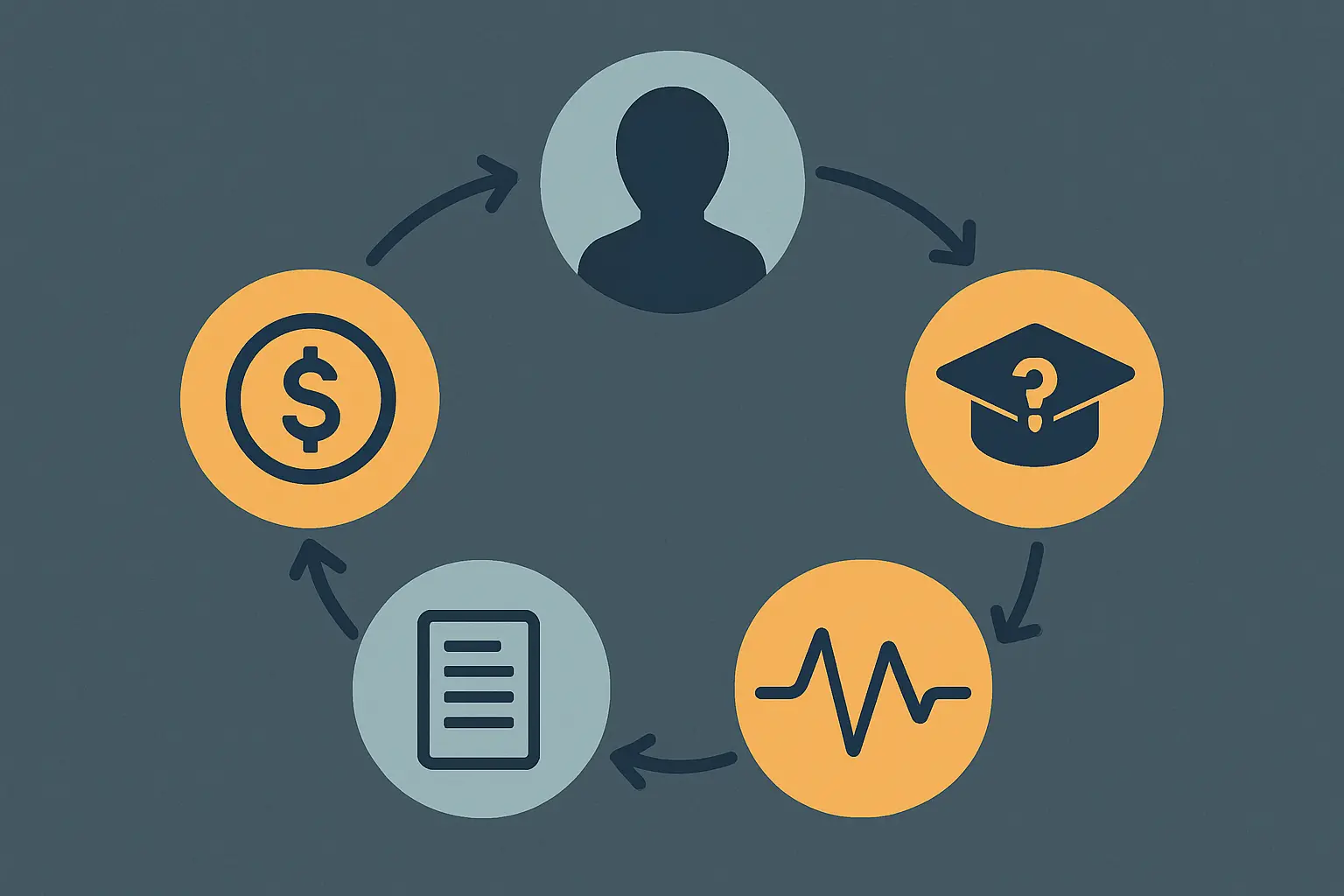
The research base consistently identifies a cluster of structural and relational factors — rather than individual psychological vulnerability alone — as the primary drivers of graduate student mental health problems:
- Financial insecurity: Doctoral stipends in most U.S. research university cities fall below local living wages, and master’s students often receive no funding at all. Approximately 21% of college and graduate students in the U.S. reported being unable to access mental health services in the past year due to financial constraints (Healthy Minds Study, 2023–24). Our guide to fully funded PhD programs outlines what funding structures look like across different disciplines and countries.
- Advisor relationships: Supervisor support is the strongest single modifiable predictor of graduate student mental health outcomes. Research published in Frontiers in Psychology (2022) found that having a supportive advisor significantly buffered the association between mental health problems and burnout, while advisor conflict was independently associated with elevated depression and active dropout consideration.
- Isolation: Graduate study is structurally isolating — extended independent research phases, limited organic peer contact outside the lab or seminar room, and frequent geographic relocation separate students from established support networks at precisely the period when they are under the most pressure.
- Work-life imbalance: Survey data cited in reviews of graduate student well-being consistently finds that the majority of doctoral students report poor work-school-life balance as a significant challenge, alongside academic performance pressure and career uncertainty.
- Imposter syndrome and performance culture: Graduate students in STEM disciplines frequently describe intense social comparison environments, fear of being exposed as inadequate, and a perceived need to appear perpetually productive — factors linked to elevated anxiety independently of objective research progress measures.
These factors interact in a reinforcing cycle: financial stress amplifies isolation, which worsens depressive symptoms, which impairs research output, which increases funding and career anxiety. Standard campus counselling provision is not designed to interrupt structural feedback loops of this kind.
Help-Seeking: Who Reaches Out (and Who Doesn’t)
There is modest good news on professional support uptake. Among surveyed students who reported depressive or anxiety symptoms, 61% were using mental health therapy or counselling in the 2024–25 Healthy Minds Study cycle, up from 59% in 2023. This reflects both increased service capacity on many campuses and a gradual reduction in stigma around help-seeking in younger cohorts.
But four in ten graduate students with clinically significant symptoms are still not receiving professional support. A 2024 systematic review and meta-analysis on help-seeking behaviours among college and graduate students, published in a peer-reviewed psychiatry journal, found a pooled rate of active help-seeking of just 28% across studies. The most common reported barriers were preference to manage problems independently, time constraints, insufficient knowledge of available resources, and a perceived absence of need for professional help.
The gap is widest for international students. Data tracking U.S. international students from 2015 to 2024 found counselling service use at 7.67% while anxiety and depression prevalence exceeded 35% — a gap attributable to cultural stigma, uncertainty about insurance coverage and confidentiality, and in some cases genuine concern that disclosure could affect academic standing or visa status.
Biomedical doctoral students show higher-than-average service uptake: 34.4% used mental health services in the past year in the CBE—Life Sciences Education study — compared to 19% among medical students in the same comparison data set. Proximity to clinical research environments appears to lower the perceived stigma threshold somewhat in that population.
For day-to-day workload stress — the kind that erodes focus before it becomes clinically significant — structural tools matter. Academic workload management platforms such as Tesify help graduate students organise research, structure chapters, and synthesise literature more efficiently, reducing the low-level cognitive overload that, when left unaddressed, compounds into the burnout pattern the data describes.
What the Data Means for Universities
The aggregate evidence makes a structural argument that research teams and university mental health working groups have begun to articulate directly: graduate student mental health is not primarily a clinical problem to be managed by campus counselling services. It is an institutional design problem rooted in funding models, supervisory cultures, and the structural isolation of doctoral training.
The 2025 Canadian scoping review (PMC12144327) catalogued interventions across 23 studies and found peer support networks and adequate financial support to be the two factors most consistently associated with improved wellbeing outcomes — not increased clinical capacity alone. Programs that had implemented mandatory advisor training and living-wage stipend adjustments showed measurable improvements in both self-reported wellbeing and retention.
For individual doctoral students navigating these conditions, the statistical picture contains something important: experiencing anxiety, depression, or burnout is not unusual, nor is it a signal of unsuitability for academic work. It is statistically normal — and it is more strongly predicted by program structure than by individual psychology. The data on PhD dropout rates consistently identifies unaddressed mental health distress as one of the most common proximate causes of leaving a program, and the evidence suggests that most students who leave do so after months of distress without professional support.
Frequently Asked Questions
What percentage of PhD students experience depression?
Estimates range from 24% to 39% depending on the measurement instrument and population. A 2021 meta-analysis in Scientific Reports found a pooled depression prevalence of 24% across 23,469 PhD students in 16 studies. A 2018 Nature Biotechnology survey of 2,279 graduate students in 26 countries found 39% screening positive for moderate-to-severe depression on the PHQ-9. The Healthy Minds Study 2024–25, covering 84,000+ students at 135 U.S. institutions, found 37% with moderate-to-severe depressive symptoms.
Are graduate student mental health rates improving?
Modestly. The Healthy Minds Study 2024–25 reports the third consecutive annual decline in U.S. student mental health metrics: severe depression is down to 18% from 23% in 2022, anxiety symptoms down to 32% from 37%, and suicidal ideation down to 11% from 15%. However, absolute rates remain substantially higher than in the general population, and the trend partly reflects increased mental health service use rather than only reduced underlying distress.
Which fields have the worst mental health outcomes for graduate students?
Biomedical sciences are the most extensively studied, with a CBE–Life Sciences Education pilot study finding 52.2% of doctoral students meeting criteria for at least one current psychiatric disorder. Healthcare graduate students (medical, nursing, osteopathic) show burnout rates of 21–55% depending on training year. Economics PhD students at top-ranked U.S. programs recorded 18% with moderate-to-severe depression or anxiety. Humanities and social sciences students are studied less systematically but face distinct structural pressures including longer time-to-degree and contracted academic job markets.
How does graduate student mental health compare to the general population?
Evans et al. (2018, Nature Biotechnology) found graduate students are more than six times as likely to experience depression and anxiety compared to the general population — a figure replicated in Canadian national data. The biomedical doctoral student study found current psychiatric disorder rates at 52.2% versus 26.2% in the general U.S. population of the same age.
What are the biggest barriers to graduate students seeking mental health help?
A 2024 systematic meta-analysis found the most common barriers are preference to deal with problems independently, time constraints, insufficient awareness of available resources, and a perceived absence of clinical need. Financial access is a significant structural barrier — approximately 21% of college and graduate students in the U.S. reported being unable to use mental health services in the past year due to cost (Healthy Minds Study, 2023–24). For international students, cultural stigma and concerns about visa or academic status further depress help-seeking rates: only 7.67% reported using counselling services despite more than 35% meeting anxiety or depression thresholds.
Is burnout linked to PhD dropout?
Yes. The CBE–Life Sciences Education biomedical doctoral student study found that 60.9% of PhD students had experienced at least fleeting thoughts of leaving their program, and 8.7% were actively considering dropout. Having a current psychiatric disorder was significantly associated with active dropout consideration. Burnout — emotional exhaustion, depersonalisation, and reduced accomplishment — predicts dropout intentions independently of research progress or external career factors.
Reduce the Cognitive Load That Precedes Burnout
Financial stress and advisor dynamics are systemic — no single tool fixes them. But the daily cognitive overload of managing a dissertation structure, tracking literature, and keeping arguments coherent is something individual students can address. Tesify is built specifically for master’s and PhD students: it helps structure chapters, synthesise sources, and maintain research organisation across the months or years of doctoral work — reducing the mechanical burden that, left unmanaged, contributes to the burnout pattern the statistics above describe.