Tesify vs Jenni AI in 2026: Which AI Academic Writing Tool Is Right for Your Thesis?
Two tools keep coming up whenever thesis and dissertation students search for AI writing support: Tesify and Jenni AI. Both promise to make academic writing faster, smarter, and less stressful — but they approach the problem from meaningfully different angles. Tesify vs Jenni AI is not simply a question of which has more features; it is a question of what you actually need to finish your thesis without jeopardising your academic standing. This hands-on comparison breaks down everything that matters: referencing accuracy, integrity safeguards, outline workflow, citation style coverage, and pricing — so you can make a decision in under ten minutes.
If you have spent time comparing the best AI writing tools for students in 2026, you have probably noticed that most tools market themselves with the same words: “AI-powered,” “citation-ready,” “built for researchers.” The gap between marketing and actual day-to-day experience is where this comparison spends most of its time.
Tool Overview at a Glance
Jenni AI launched as an AI writing assistant aimed at researchers and students. Its core proposition is that it writes alongside you in real time — offering AI autocomplete, citation insertion, and a suite of review layers (Peer Review, Claim Confidence, Proofread, Tone of Voice) to help you polish a draft before submission. It handles long documents reasonably well and supports PDF uploads so you can pull citations from papers you have already found.
Tesify is designed from the ground up as an integrity-first thesis and dissertation assistant. Rather than positioning itself as a prose generator, Tesify focuses on the structural layer of thesis writing — chapter planning, argument scaffolding, in-line referencing across four major citation styles — combined with an originality self-check so you can verify your work before your institution does. The philosophy: AI should help you think and organise, not write for you wholesale.
Feature Comparison Table
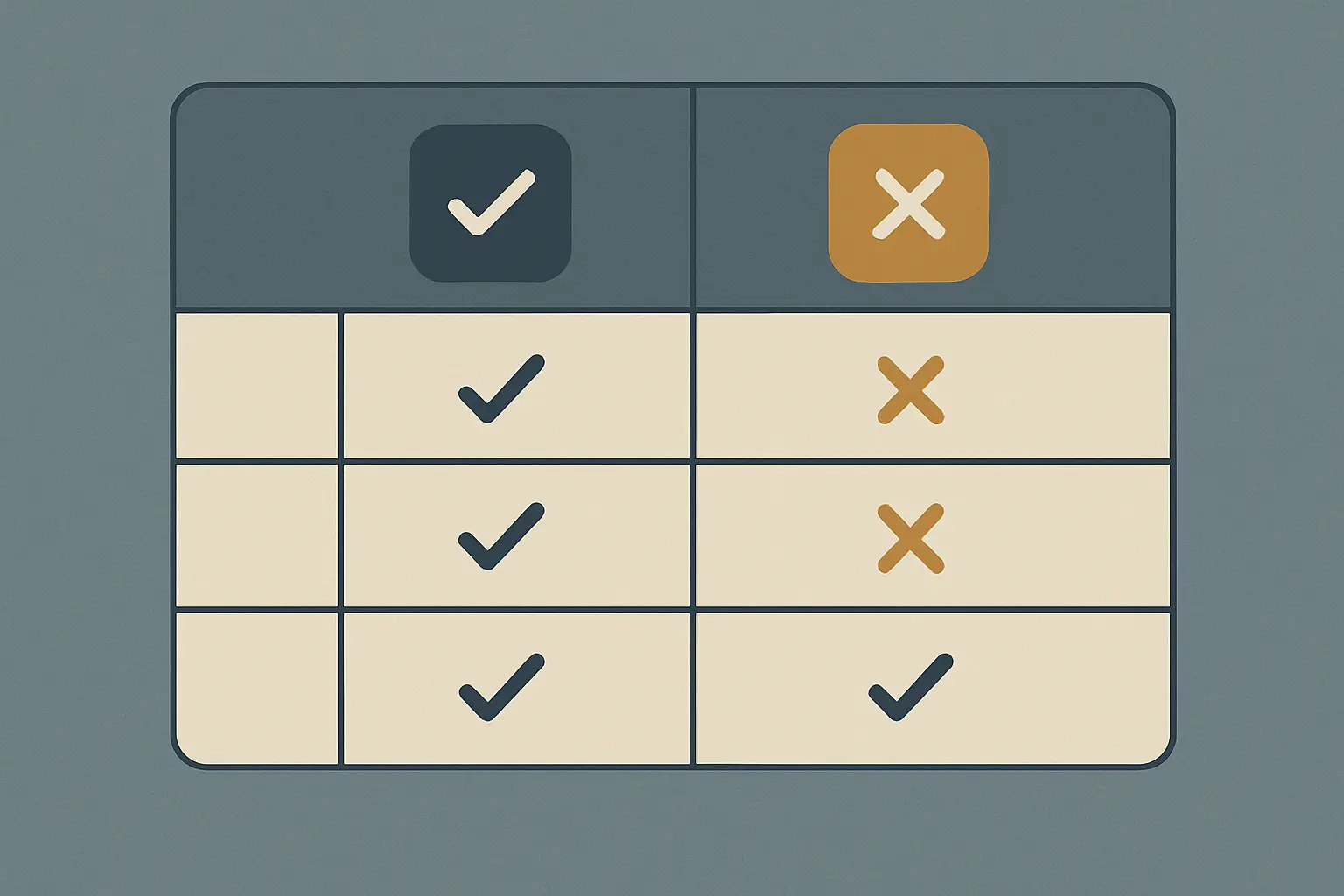
| Feature | Tesify | Jenni AI |
|---|---|---|
| Primary focus | Integrity-first thesis structuring & referencing | AI prose autocomplete & citation insertion |
| APA 7 support | Yes | Yes |
| MLA support | Yes | Yes |
| Chicago style | Yes | Yes |
| Vancouver style | Yes | Not featured |
| Chapter/outline planner | Yes — structured chapter scaffold | Partial — document organisation tools |
| Originality self-check | Yes — built-in pre-submission check | No dedicated feature |
| AI prose generation | Guided drafting assistance | Inline autocomplete + full section generation |
| PDF upload / source import | Yes | Yes (unlimited on free) |
| Free tier | Yes — no credit card required | Yes — 200 AI words/day |
| Paid plan (approx.) | See tesify.pro for current pricing | ~$29/month (Pro); annual discount available |
| University policy alignment | Explicit integrity-first design | Leaves compliance to the student |
Referencing Accuracy
Accurate references are non-negotiable. A single malformed citation can flag your bibliography in a viva, or worse, trigger an academic misconduct review if an examiner suspects you are citing sources you have not actually read.
Jenni AI inserts in-text citations from sources you upload as PDFs or from its web citation database. The citations are generally formatted correctly for APA and MLA, and the tool has improved its accuracy over successive updates. That said, users report occasional metadata errors — incorrect publication years, missing volume numbers — especially when the source data Jenni pulls from is incomplete. You should always verify each generated reference against the original source before submission.
Tesify also generates references from your uploaded sources, but the emphasis is on traceability: every reference it produces is tied back to the underlying source document, so you can verify the chain from claim to citation without leaving the platform. Tesify supports APA 7, MLA 9, Chicago (notes-bibliography and author-date), and Vancouver — making it the stronger choice for medical, nursing, or health-sciences students whose institutions mandate Vancouver. For anyone navigating APA’s sometimes-complex rules for secondary sources, this level of control matters. If you want a deeper dive into that issue, our guide on the best plagiarism checkers in 2026 covers how originality tools and referencing interact.
Academic Integrity & Originality Safeguards
This is the sharpest difference between the two tools, and the one that matters most if your university uses Turnitin or a comparable detector.
Jenni AI includes review layers — Peer Review, Claim Confidence, Proofread, and Tone of Voice — that help you improve drafts before submission. These are valuable editing utilities, but none of them constitute an originality check. Jenni does not scan your text against a database of published works to flag potential matches. That responsibility sits entirely with you.
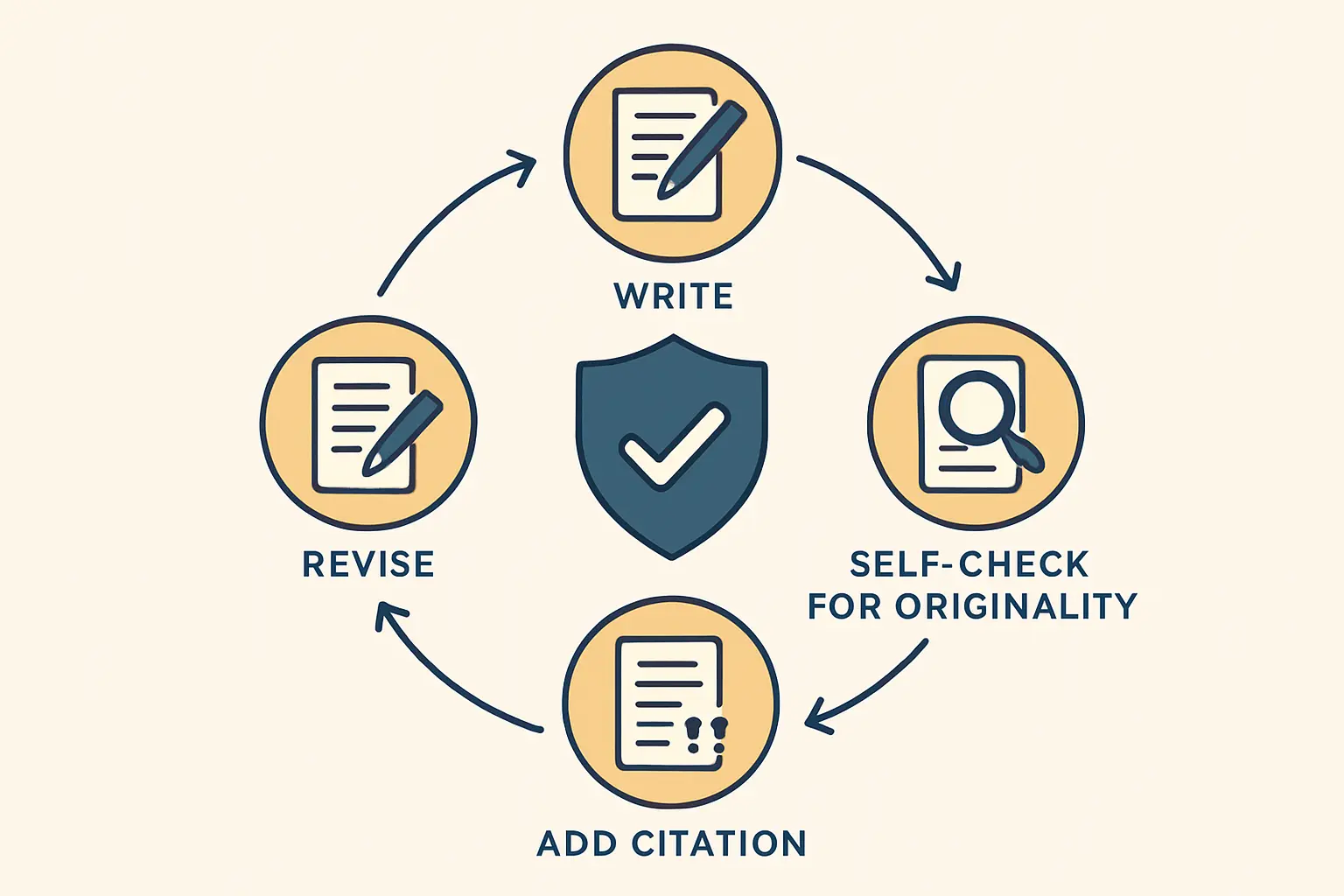
Tesify builds in a pre-submission originality self-check as part of its core workflow. The purpose is not to game a similarity score — it is to let you see exactly where your text may overlap with existing literature before your institution’s system does. This positions Tesify squarely in the “integrity-first” camp: the tool is designed to help you produce work that is genuinely yours, with citations that prove it. That philosophy also extends to how Tesify’s AI drafting assistance is framed — it guides your thinking and structure rather than replacing your voice wholesale. If you are asking yourself whether you can use AI to write your thesis at all, the distinction matters enormously: a tool that keeps you in the driver’s seat is categorically different from one that writes for you.
Structure & Outline Workflow
A thesis is not a long essay — it is a structured argument across multiple chapters, each of which has to stand up to examiner scrutiny on its own terms. How a tool handles the structural layer is often what separates useful from genuinely helpful.
Jenni AI gives you a document-level editor with organisational features for managing large writing projects. It works well for students who already have a clear structure in mind and want help filling sections with prose. Its AI autocomplete is genuinely fast and relatively academic in tone. Where it falls short is in the planning phase: Jenni does not guide you through the logic of a literature review, the appropriate framing of a methodology section, or how your discussion chapter should map back to your research questions.
Tesify treats structure as the starting point, not an afterthought. Before you write a word of prose, you can build a chapter scaffold — Introduction, Literature Review, Methodology, Findings, Discussion, Conclusion — with guidance on what each section should accomplish and how it connects to your research question. This is especially valuable for Master’s and PhD students writing their first substantial academic document. For a step-by-step look at how AI-assisted outlining works in practice, see our guide to the best AI thesis writer in 2026. Students who want to tackle their literature review section first will also find a practical workflow guide on how to write a literature review faster with AI on tesify.app.
Citation Style Coverage
Both tools cover the three most common citation styles: APA (7th edition), MLA (9th edition), and Chicago. For the majority of humanities and social-science students, that coverage is sufficient.
The gap emerges in specialist disciplines. Vancouver style — the numbered reference system used throughout medicine, clinical research, and many health sciences journals — is a listed feature of Tesify but is not prominently featured in Jenni AI’s toolkit. If you are writing a biomedical dissertation, a nursing dissertation, or a systematic review for a medical programme, that single difference can be the deciding factor.
Both tools struggle to some degree with edge cases: citing a retracted paper, formatting a government report, or handling a conference proceeding with no named editor. In those cases, you will need to consult the official style manual directly regardless of which AI tool you use.
Pricing & Free Tiers
Jenni AI offers a free tier that allows 200 AI-generated words per day with unlimited PDF uploads, AI autocomplete, and journal and web citations. The Pro plan (approximately $29/month at the time of writing) removes the word limit and unlocks all features. An annual subscription typically saves around 40% compared to monthly billing — a meaningful saving for a year-long dissertation project.
Tesify offers a free sign-up with no credit card required. The free tier lets you explore the core workflow — including the chapter planner, referencing tools, and originality self-check — before committing. Paid plans are available for students who need higher usage limits; visit tesify.pro for current pricing.
On pure price, the tools are in a similar bracket at the paid tier. The relevant question is not which is cheaper but which delivers more value for your specific use case.
Pros & Cons
Tesify
- Built-in originality self-check before submission
- Vancouver citation style supported (critical for health sciences)
- Structured chapter planning guides the writing process from the start
- Integrity-first design keeps the work verifiably yours
- Free tier with no credit card required
- APA, MLA, Chicago, and Vancouver in one platform
- AI prose generation is more guided than freeform — some students prefer more autocomplete freedom
- Smaller brand footprint than Jenni AI (though growing rapidly)
Jenni AI
- Fast AI autocomplete that feels natural during freewriting
- Multiple review layers (Peer Review, Claim Confidence, Proofread, Tone)
- Unlimited PDF uploads on the free tier
- Handles long documents (50+ pages) with stable performance
- Well-established user community and tutorials
- No built-in originality self-check — you need a separate tool before submission
- Free tier limited to 200 AI words per day (not enough for sustained thesis drafting)
- Vancouver style not prominently supported
- Structural guidance is limited — better for students who already have a plan
- Metadata errors in auto-generated references require manual verification
Verdict: Who Should Choose Which
After comparing both tools across every dimension that matters for thesis and dissertation writing in 2026, here is the honest recommendation.
Choose Tesify if:
- You are writing a thesis or dissertation and academic integrity is a hard requirement (it always is).
- You are in medicine, nursing, or a health-sciences discipline that requires Vancouver style.
- You are at the planning stage and need help structuring chapters before you draft anything.
- You want a single platform that handles outlining, referencing, drafting guidance, and an originality self-check without needing to stitch together multiple tools.
- You want to try a tool that does not require a credit card to start.
Choose Jenni AI if:
- Your primary need is fast, inline AI autocomplete while you write — you want the tool to fill in sentences as you go rather than guide your structure.
- You write in APA, MLA, or Chicago exclusively and do not need Vancouver.
- You already have your structure sorted and want a drafting accelerator more than a planning tool.
- You are comfortable running a separate plagiarism check (via Turnitin, Copyleaks, or another service) before submission.
For most thesis and dissertation students who care about producing work that is defensible, original, and correctly referenced, Tesify’s integrity-first approach is the stronger fit. Jenni AI is a good tool — but it outsources the originality-checking problem to you, which adds a step and a cost that many students do not budget for. If you want a full picture of how Tesify compares across the broader landscape, see our roundup of the best AI writing tools for students in 2026.
Frequently Asked Questions
Is Tesify or Jenni AI better for a Master’s dissertation?
Tesify is the stronger choice for a Master’s dissertation because it provides structured chapter planning alongside referencing and an originality self-check — all in one platform. Jenni AI works well if you already have your structure and need prose assistance, but you will need a separate tool to check originality before submission. For a full breakdown of how AI thesis tools work at the dissertation level, see our guide on the best AI thesis writer in 2026.
Does Jenni AI check for plagiarism?
No. Jenni AI includes review layers (Peer Review, Claim Confidence, Proofread, Tone of Voice) for improving draft quality, but it does not include a plagiarism or originality check. You would need to use a separate service — such as Turnitin, Scribbr, or Copyleaks — before submitting. Tesify’s built-in originality self-check is one of its key differentiators over Jenni AI.
Which tool supports Vancouver referencing?
Tesify supports Vancouver referencing alongside APA, MLA, and Chicago. Jenni AI’s citation coverage is centred on APA, MLA, and Chicago, without Vancouver listed as a supported style. For medical, nursing, biomedical, and many health-sciences programmes that mandate Vancouver, Tesify is the only complete option between the two.
Is it safe to use AI writing tools for academic work?
It depends on your institution’s policy and how you use the tool. AI tools that assist with structure, referencing, and editing are increasingly accepted; AI tools that write whole sections for you raise academic integrity concerns. Both Tesify and Jenni AI operate in the “assistance” space, but Tesify’s integrity-first design keeps your authorship more clearly central. Always check your university’s specific AI policy before using any tool.
Can I use Tesify for free without a credit card?
Yes. Tesify’s free tier is available with no credit card required. You can create an account, run a chapter outline, generate references, and use the originality self-check within the free tier limits. Jenni AI also has a free tier, but it caps AI word generation at 200 words per day, which is limiting for active thesis writing.
How does Tesify vs Jenni AI compare to other AI academic writing tools?
Tesify and Jenni AI are both thesis-focused, which already separates them from general AI writing tools like ChatGPT or Claude that lack built-in citation management. Compared to each other, Tesify leads on integrity features (originality self-check, Vancouver support, structured chapter planning) while Jenni AI leads on freeform prose generation and real-time autocomplete. For a wider view of the field, see our comparison of ChatGPT vs Claude for academic writing in 2026.