What Is a Good Turnitin Similarity Score in 2026? How to Read (Not Game) Your Report
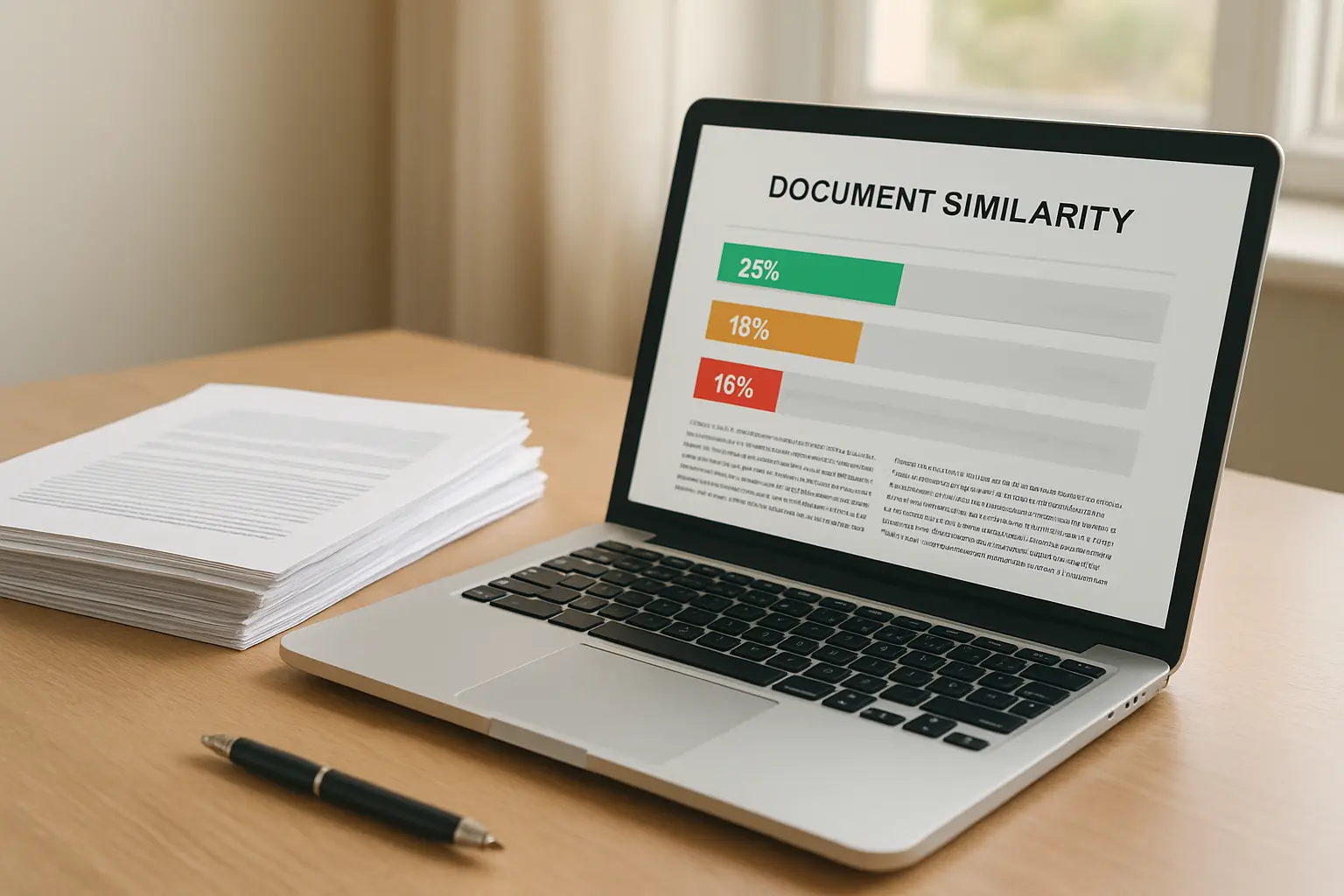
You submitted your dissertation draft, the similarity report loaded, and a number appeared at the top. If your first instinct was to panic — or to wonder how to make it smaller — you are not alone. The Turnitin similarity score is one of the most misunderstood numbers in academic life, and the misunderstanding runs in both directions: students with a 28% score assume they are in serious trouble, while students with a 4% score assume they are safe. Neither assumption is automatically correct.
This guide explains what the similarity score actually measures, how to read the colour-coded breakdown honestly, why no single percentage separates “acceptable” from “plagiarised”, and what responsible steps to take if your number looks high for legitimate reasons. What it does not cover is how to artificially reduce your score — because chasing a lower number while the underlying attribution problem remains is the opposite of academic integrity.
What a Turnitin Similarity Score Actually Measures
The similarity score is a percentage representing how much of your submitted text matches text already held in Turnitin’s database. That database includes previously submitted student papers, published journal articles, websites, books, and news content from thousands of institutions worldwide. The algorithm compares phrases and passages — it does not assess intent, context, or whether a match is properly attributed.
This distinction matters enormously. A 20% similarity score could mean that 20% of your paper consists of well-cited direct quotations from key theorists in your field — which is entirely appropriate in disciplines like philosophy, legal studies, or literary criticism. It could also mean that 20% of your text is lifted from a single source without any attribution whatsoever. The percentage is identical in both cases; the academic integrity situation is completely different.
Turnitin’s own documentation states clearly: a high similarity score does not always suggest that a piece of writing has been plagiarised, just as a low similarity score does not always indicate that no plagiarism has occurred. The score is a starting point for human review, not a verdict in itself.
The Colour System Decoded
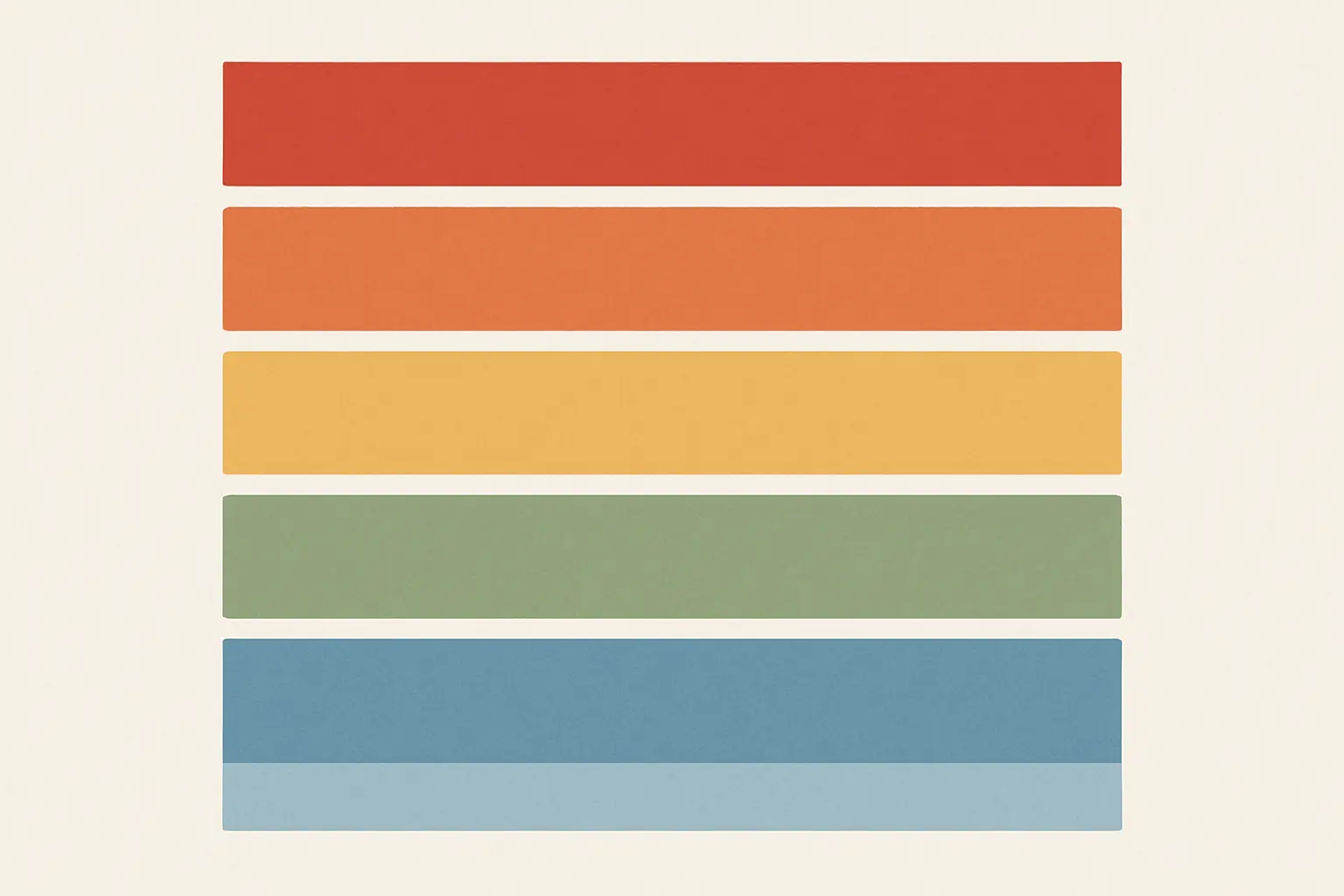
When your report loads in Feedback Studio, the overall percentage appears in one of five colours. Each colour corresponds to a numerical range, not a judgment on the quality or integrity of your work:
| Colour | Score Range | What It Signals |
|---|---|---|
| Blue | 0% | No matches found — not inherently safer or better (see below) |
| Green | 1–24% | Low overlap — typically within acceptable norms for most assignment types |
| Yellow | 25–49% | Moderate overlap — requires a close look at the source breakdown |
| Orange | 50–74% | High overlap — will attract instructor attention regardless of context |
| Red | 75–100% | Very high overlap — nearly always requires explanation or investigation |
The colour badge on the overall score tells you very little on its own. A yellow score made entirely of properly cited block quotations is far less concerning than a green score containing one large uncited passage taken from a single source. Always open the full report and read the source breakdown before drawing any conclusions.
Why There Is No Universal “Good” Turnitin Similarity Score
Institutions, departments, and individual instructors set their own thresholds — and those thresholds vary significantly by discipline and assignment type. Several patterns are common across higher education:
- Empirical dissertations in social science, health, or medicine often show higher overlap because methodology sections describe standard procedures in near-identical language across the field literature.
- Legal writing routinely cites statutes, case holdings, and codified rules verbatim — substantial matching text is expected and professionally necessary.
- Literature reviews in any discipline involve synthesising and quoting previous scholarship, so a 20–30% score is not unusual when citations are complete and properly formatted.
- Short reflective essays are expected to consist almost entirely of original student prose, so even a 15% score may prompt questions depending on how the matches are distributed.
Many institutions use 15–25% as an informal review trigger, but this figure is a prompt for human assessment — not an automatic fail. Your course syllabus or student handbook is always the authoritative source for your specific assignment. If neither document specifies a threshold, ask your instructor directly before you submit.
Reading the Source Breakdown Honestly
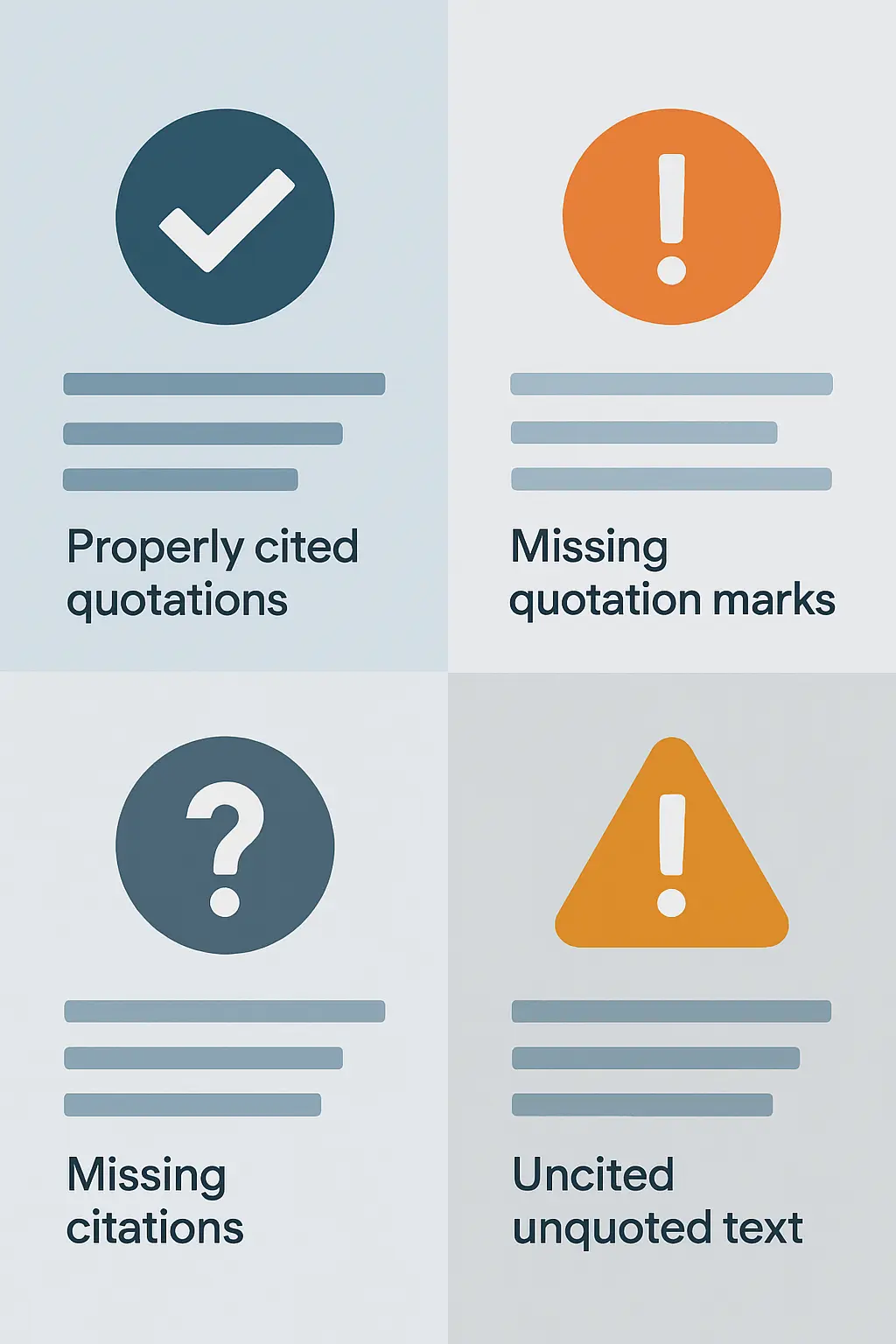
The match overview inside the full report is where the meaningful analysis actually happens. Turnitin’s enhanced reports now categorise each highlighted passage into one of four groups:
- Cited and Quoted — the passage is in quotation marks and includes a citation to the original source. This is text you have handled correctly.
- Missing Quotation — the text is cited but so close to the source wording that quotation marks are also required. This is a formatting correction, not a misconduct issue.
- Missing Citation — the text is formatted as a quotation but has no citation. Adding the reference resolves the flag.
- Not Cited or Quoted — matching text with neither quotation marks nor a citation. This is the category that warrants genuine concern and revision before submission.
A useful practical rule: check what proportion of your matches fall into the “Not Cited or Quoted” category, and whether any single source accounts for a large share. A 30% score in which nearly all matches are “Cited and Quoted” is not an integrity problem. A 12% score in which the entire overlap traces back to one uncited source without quotation marks is.
Also check whether your matches are distributed — many small overlaps spread across many different sources, which is consistent with normal academic writing — or concentrated, meaning a long continuous block from a single source, which warrants careful review regardless of the percentage.
When a High Score Is Not a Problem
Several legitimate situations produce elevated similarity scores, and understanding them prevents unnecessary anxiety:
- Reference lists and bibliographies. Most instructors configure Turnitin to exclude reference sections, but when they are not excluded, a long bibliography can add several percentage points on its own.
- Standard terminology and fixed phrases. Scientific method names, statistical formulae, legal clause numbers, and discipline-specific definitions are worded identically across thousands of papers. Phrases like “semi-structured interviews were conducted using purposive sampling” are effectively universal in qualitative research and will flag in almost any sociology or education paper.
- Previously submitted work from other courses. If you submitted a related assignment in an earlier course at the same institution, Turnitin may hold that paper in its database and flag it as a match against your current submission. This is a separate concern from external plagiarism — see our guide to self-plagiarism and text recycling rules for how institutions handle this distinction and when reusing your own work requires disclosure.
- Quoted primary sources. A history paper quoting archival documents, or a law paper quoting legislation, will naturally show high matches if those sources exist in Turnitin’s database.
When a High Score Warrants Attention
Conversely, some patterns in the source breakdown should prompt you to revise before submission:
- A large block of highlighted text from a single source sitting in the “Not Cited or Quoted” category
- Paraphrased passages where only one or two words differ from the original source wording, with no citation
- Text from a source you read and drew on conceptually but forgot to attribute
- Passages from websites, lecture slides, or informal online content incorporated directly without attribution
In each of these cases, the appropriate response is to revise the work using proper paraphrasing and citation practices — not to rephrase passages with the sole purpose of confusing the detection algorithm. Rephrasing to evade a detector while leaving the source unattributed is a form of academic dishonesty even if it produces a lower score. An increasing number of institutional codes of conduct now address evasion tools explicitly as a misconduct category in their own right.
Why a Near-Zero Score Is Not the Goal
A 0% or near-zero similarity score is not evidence that a piece of writing is original, well-researched, or academically sound. It may simply mean:
- The paper draws on very few sources — itself a concern in research-heavy assignments
- The sources used are not yet in Turnitin’s database (recent preprints, obscure reports, or non-English sources)
- Text was rephrased in ways that obscure its origins without any accompanying citation
Academic integrity is about honest attribution and genuine intellectual contribution — both of which can be entirely absent in a paper with a blue (0%) badge. Instructors read papers, not just scores. A well-reasoned piece of analysis that cites eight sources correctly will naturally show some matching text. A paper that paraphrases those same eight sources into unrecognisable prose without citing any of them violates academic integrity regardless of its similarity score.
The purpose of reviewing your similarity report before submission is to catch your own errors: a missing citation, an over-reliance on one source, an accidental verbatim passage you intended to paraphrase. That is a fundamentally different activity from treating the report as a performance metric to minimise.
What to Do If Your Score Is Legitimately High
If your score is high and the matches arise for legitimate reasons — properly cited quotations, fixed terminology, or a bibliography that was not excluded — a methodical review process will confirm this:
- Open the full report and check which match categories the highlighted passages fall into. If the bulk of your overlap is “Cited and Quoted” or “Missing Quotation”, you have a formatting adjustment to make, not an integrity problem.
- Verify that every direct quotation carries both quotation marks and a citation. This shifts flagged text from the concern categories into “Cited and Quoted”, which changes how the report reads.
- Check whether your institution allows instructors to exclude quoted and cited text from the overall percentage calculation. When exclusions are applied, the adjusted figure is the one that matters for threshold purposes.
- If after these checks your score remains high and your work is properly attributed, contact your instructor before the submission deadline. Most instructors respond well to students who proactively explain legitimate source-heavy writing rather than waiting for a query after submission.
Running a preliminary check before your final Turnitin submission helps you catch attribution gaps while you still have time to fix them. For a comparison of the tools available for pre-submission review, see our roundup of the best plagiarism checkers in 2026. If you want a step-by-step walkthrough of the checking process itself, our guide on how to check for plagiarism covers both free and institutional options.
One additional distinction worth keeping in mind: Turnitin’s similarity engine and its AI detection layer are separate tools. The similarity score measures textual overlap with existing sources in its database. AI detection uses a different statistical model to assess whether text has characteristics associated with AI-generated writing — and that model carries its own accuracy limitations. For independent data on how reliable AI detectors actually are in 2026, the analysis at AI Detection Accuracy Statistics 2026 on tesify.app provides a field-level breakdown worth reading alongside your similarity report.
Frequently Asked Questions
Is a 15% Turnitin similarity score good?
A 15% score falls in the green range and is generally acceptable at most institutions. Whether it is “good” depends on the assignment type, the match categories in the source breakdown, and your institution’s specific policy. A 15% score consisting entirely of properly cited quotations is not a problem; a 15% score concentrated in one uncited source passage is a different matter entirely.
What Turnitin similarity score is too high?
Most institutions flag scores above 25% for manual review, though no universal threshold exists. Scores in the orange (50–74%) and red (75–100%) ranges will almost always attract close scrutiny. The source breakdown matters more than the number itself — a yellow score made of properly cited matches is less concerning than a green score with a large uncited block from a single source.
Does Turnitin detect paraphrasing?
Turnitin’s similarity engine primarily detects verbatim and near-verbatim text matches. Thorough paraphrasing may not produce a similarity flag — but an uncited paraphrase is still plagiarism. The absence of a Turnitin match does not make unattributed paraphrasing academically honest. Instructors also read for ideas and argument structure, and can often identify conceptual lifting even without a detection flag.
Should I try to get my Turnitin score as low as possible?
No. The goal is not a low score — it is honest, well-cited work. A properly researched paper that quotes and cites its sources will naturally show some similarity. Chasing a lower score by removing citations, avoiding quotation marks, or using tools designed purely to evade detection undermines academic integrity and may itself violate your institution’s code of conduct.
Why did my similarity score go up after I added more citations?
Citations that include author names, journal titles, DOIs, or publisher details may themselves match text held in Turnitin’s database, slightly increasing the overall percentage. This is expected and entirely appropriate. If your institution does not automatically exclude the reference list from the scan, ask your instructor whether bibliography entries count toward the threshold for your assignment.
Can a 0% Turnitin score mean my paper still has integrity problems?
Yes. A 0% score simply means Turnitin found no text in its database that matches yours. It says nothing about whether the ideas, data, or arguments in your paper are genuinely your own. A paper that paraphrases sources not yet in Turnitin’s database without citing them remains plagiarism. Academic integrity rests on attribution and honest scholarship, not on what a detection tool can or cannot find.
Catch Your Own Errors Before Your Instructor Does
The most effective moment to spot a missing citation, an over-relied source, or an accidental verbatim passage is before final submission — not after you receive a query. Tesify helps you structure and draft your thesis or dissertation with built-in attribution guidance, so you can approach the originality check with confidence rather than crossed fingers.
Already have a draft? Walk through our complete guide on how to check for plagiarism step by step before you submit.