
Chicago Style Citation in 2026: Notes-Bibliography vs Author-Date (Copy-Paste Examples)
Every time a history student drops a footnote and a sociology student drops a parenthetical, they are both using Chicago style citation — yet their papers look nothing alike. The Chicago Manual of Style (CMOS) offers two separate documentation systems, and choosing the wrong one for your discipline is one of the most common formatting errors instructors flag at the citation stage. This guide covers both systems with exact, copy-paste-ready examples updated for CMOS 18th edition (2024), the latest release from the University of Chicago Press.
Whether your assignment requires the Notes-Bibliography format with footnotes or the Author-Date format with parenthetical citations, you will find complete templates here for books, journal articles, book chapters, and websites — plus a plain-English explanation of when ibid. is still acceptable and what changed between CMOS 17 and CMOS 18.
What Is Chicago Style? (CMOS 18th Edition)
The Chicago Manual of Style is published by the University of Chicago Press and is now in its 18th edition (2024). It is the dominant style guide for book publishers, many humanities journals, and university presses across the United States and beyond. Students writing theses or dissertations often use Kate Turabian’s A Manual for Writers of Research Papers, Theses, and Dissertations (9th ed., University of Chicago Press, 2018), an officially recognised student adaptation of CMOS. Both sources are aligned on every citation format covered in this guide.
The most significant change from CMOS 17 to CMOS 18 is the removal of the place of publication requirement for books. Under CMOS 18, you no longer need to list the city (e.g., “New York:”) before a publisher’s name. You may still include it where it helps distinguish between publishers with similar names, but it is no longer mandated. All examples below follow CMOS 18.
Which System Should You Use?
The short answer: ask your instructor. If no guidance is given, your subject area is the clearest signal:
| System | Primary Disciplines | In-Text Marker | End Matter |
|---|---|---|---|
| Notes-Bibliography (NB) | History, literature, art history, philosophy, religion | Superscript number → footnote/endnote | Bibliography |
| Author-Date (AD) | Sociology, political science, economics, natural sciences | Parenthetical (Lastname Year, page) | Reference list |
Notes-Bibliography: Footnotes, Shortened Notes & Ibid.
In the NB system, every time you quote, paraphrase, or summarise a source, you insert a superscript number in your text and a corresponding note at the bottom of the page (footnote) or at the end of the document (endnote). A bibliography lists all sources alphabetically at the end of the paper or chapter.
Full Notes vs Shortened Notes
The first note for any source uses the full citation — author firstname-first, full title, publication details, and page number. All subsequent notes for the same source use a shortened form: author surname, an abbreviated title (if the title runs to more than four words), and a page number. You never repeat full publication details a second time.
- Full note format: Firstname Lastname, Title of Book (Publisher, Year), page.
- Shortened note format: Lastname, Short Title, page.
Note the key structural difference from bibliography entries: in footnotes, the author’s name is given firstname-last and elements are separated by commas. In the bibliography, the name is inverted (Lastname, Firstname) and elements are separated by periods. This distinction trips up many students who copy their bibliography entries directly into footnotes.
Ibid.
Ibid. (from the Latin ibidem, “in the same place”) may be used when a footnote cites the immediately preceding source at the same page. CMOS 18 acknowledges ibid. as acceptable but mildly discourages it, since numbered shortened notes are easier to follow in digital documents with hyperlinked footnotes. The rules:
- Same source, same page: write simply Ibid.
- Same source, different page: write Ibid., 47.
- If any other source intervenes between two citations of the same work, ibid. cannot be used — use the shortened note instead.
Many university style sheets still permit ibid. freely. Check your department guide before abandoning it.
Copy-Paste Examples: Notes-Bibliography
All examples below follow CMOS 18. Place of publication is omitted from book citations. Titles of books and journals are italicised; article and chapter titles appear in quotation marks.
Books
| Format | Example |
|---|---|
| Full footnote | 1. Charles Yu, Interior Chinatown (Pantheon Books, 2020), 45. |
| Shortened note | 2. Yu, Interior Chinatown, 48. |
| Ibid. (same page) | 3. Ibid. |
| Ibid. (different page) | 4. Ibid., 51. |
| Bibliography entry | Yu, Charles. Interior Chinatown. Pantheon Books, 2020. |
Journal Articles
| Format | Example |
|---|---|
| Full footnote | 5. Hyeyoung Kwon, “Inclusion Work: Children of Immigrants in Korean Schools,” American Journal of Sociology 128, no. 3 (2022): 812, https://doi.org/10.1086/722756. |
| Shortened note | 6. Kwon, “Inclusion Work,” 815. |
| Bibliography entry | Kwon, Hyeyoung. “Inclusion Work: Children of Immigrants in Korean Schools.” American Journal of Sociology 128, no. 3 (2022): 800–840. https://doi.org/10.1086/722756. |
Chapter in an Edited Book
| Format | Example |
|---|---|
| Full footnote | 7. Kathleen Doyle, “The Queen Mary Psalter,” in The Book by Design, ed. P. J. P. Goldberg and Felicity Riddy (University of Chicago Press, 2023), 65. |
| Shortened note | 8. Doyle, “Queen Mary Psalter,” 68. |
| Bibliography entry | Doyle, Kathleen. “The Queen Mary Psalter.” In The Book by Design, edited by P. J. P. Goldberg and Felicity Riddy, 60–78. University of Chicago Press, 2023. |
Websites
For web sources, include the author or organisation, the page title in quotation marks, the site name, the date published or last modified (if available), and the URL. When no date is given, add an access date at the end: “accessed June 23, 2026.”
| Format | Example |
|---|---|
| Full footnote | 9. World Health Organization, “Mental Health,” WHO, last modified June 1, 2026, https://www.who.int/health-topics/mental-health. |
| Shortened note | 10. World Health Organization, “Mental Health.” |
| Bibliography entry | World Health Organization. “Mental Health.” WHO. Last modified June 1, 2026. https://www.who.int/health-topics/mental-health. |
Author-Date: In-Text Citations & Reference List
The Author-Date system is structurally similar to APA 7 — both use parenthetical citations and a reference list — but differs in several details. The in-text pattern is (Lastname Year, page). When the author’s name appears in the running sentence, the parenthetical reduces to (Year, page): “Kwon (2022, 812) argues that…”
The single most visible structural difference in the reference list is the position of the year: in Author-Date, the year moves immediately after the author’s name, separated by a period. In the NB bibliography, the year appears near the end of the citation, in parentheses after volume/issue information. Everything else — alphabetical order by surname, inverted name, italicised book and journal titles — stays the same.
Unlike a bibliography, a reference list contains only sources cited in the text. No additional consulted-but-not-cited works are included.
Copy-Paste Examples: Author-Date
Books
| Format | Example |
|---|---|
| In-text | (Turabian 2018, 45) |
| Reference list | Turabian, Kate L. 2018. A Manual for Writers of Research Papers, Theses, and Dissertations. 9th ed. University of Chicago Press. |
Journal Articles
| Format | Example |
|---|---|
| In-text | (Kwon 2022, 812) |
| Reference list | Kwon, Hyeyoung. 2022. “Inclusion Work: Children of Immigrants in Korean Schools.” American Journal of Sociology 128 (3): 800–840. https://doi.org/10.1086/722756. |
Chapter in an Edited Book
| Format | Example |
|---|---|
| In-text | (Doyle 2023, 65) |
| Reference list | Doyle, Kathleen. 2023. “The Queen Mary Psalter.” In The Book by Design, edited by P. J. P. Goldberg and Felicity Riddy, 60–78. University of Chicago Press. |
Websites
| Format | Example |
|---|---|
| In-text | (World Health Organization 2026) |
| Reference list | World Health Organization. 2026. “Mental Health.” WHO. Last modified June 1, 2026. https://www.who.int/health-topics/mental-health. |
NB vs AD: Side-by-Side Comparison
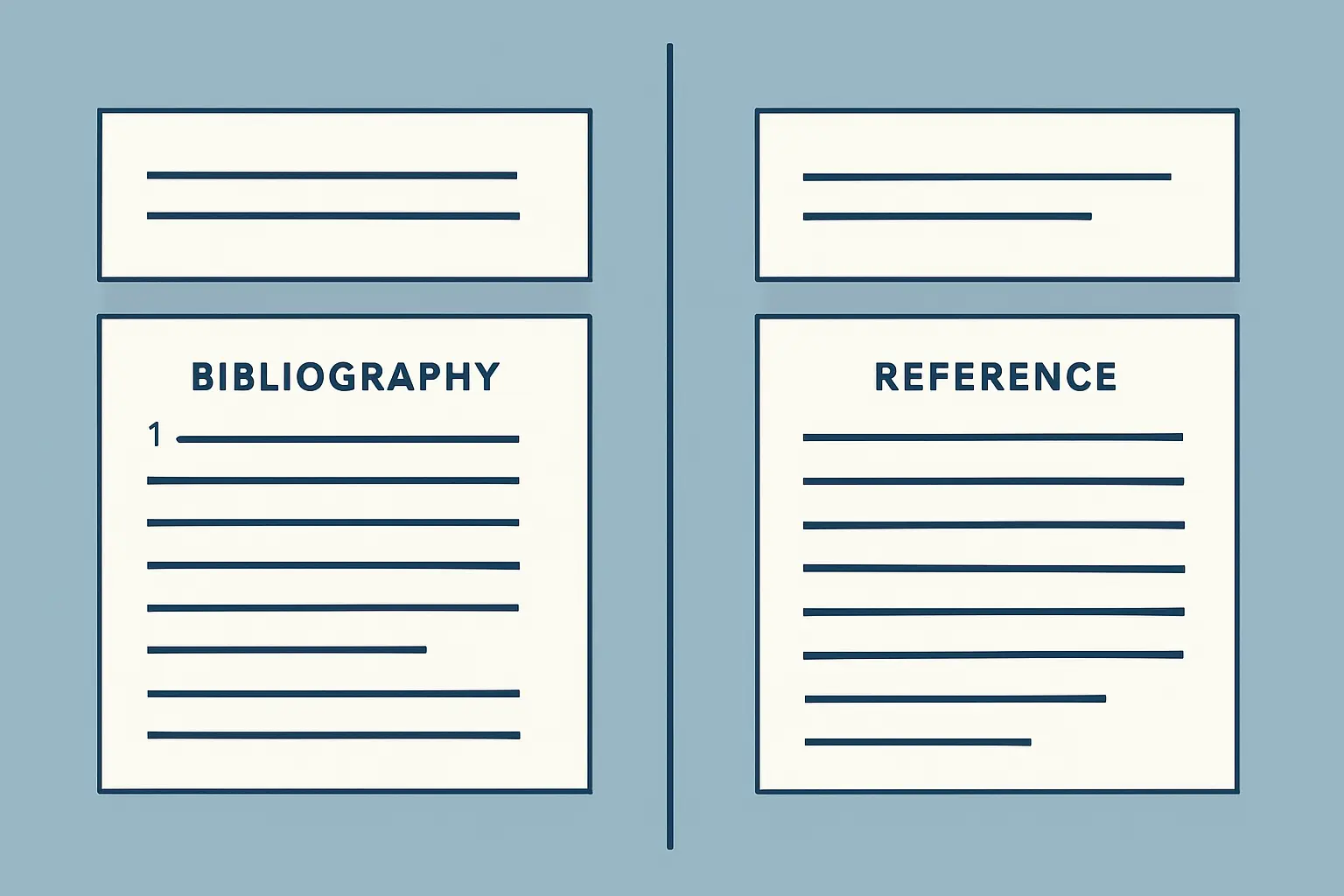
| Feature | Notes-Bibliography | Author-Date |
|---|---|---|
| In-text marker | Superscript number (1, 2, 3…) | Parenthetical (Lastname Year, page) |
| Year position in list | In parentheses near the end of the entry | Immediately after the author’s name |
| End matter title | Bibliography | References (or Reference List) |
| Uncited works in list | Permitted (consulted sources may appear) | Not permitted (cited works only) |
| Ibid. permitted | Yes (acceptable; mildly discouraged in CMOS 18) | No |
| Discursive footnotes | Yes — notes can carry commentary alongside citations | Rarely; brief notes are possible but uncommon |
| Typical disciplines | History, literature, art history, religion | Sociology, political science, economics, sciences |
Common Chicago Citation Mistakes to Avoid
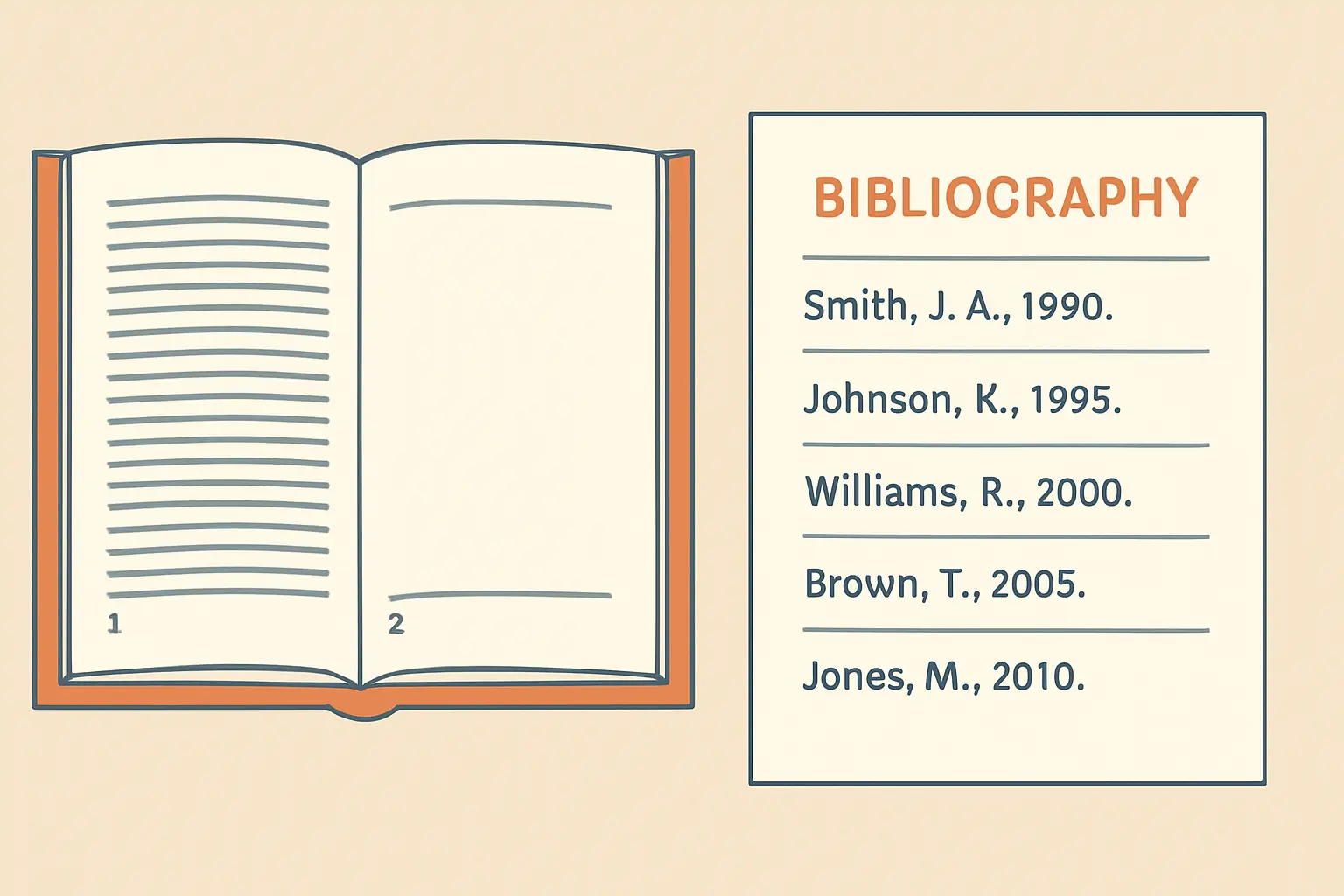
- Copying bibliography format into footnotes. Footnotes list the author firstname-first with commas between elements. Bibliographies invert the name and use periods. These are structurally different entries — never paste one into the other’s place.
- Omitting page numbers in footnotes. Unlike bibliographies, footnotes almost always require a specific page or page range. “Kwon 2022” alone is not a complete footnote in either Chicago system.
- Mixing NB and AD in one paper. Pick one system and apply it throughout. Switching mid-paper is an automatic style violation.
- Leaving out the DOI. CMOS 18 expects DOIs for journal articles when one exists. Always include it if the article has one.
- Over-using ibid. If a reader skips directly to a footnote and sees “Ibid., 23,” they cannot identify the source without reading backward through every preceding note. Reserve ibid. for truly consecutive citations where locating the previous note is immediate.
- No access date for undated websites. When a website provides no publication or modification date, add “accessed [Month Day, Year]” after the URL.
If you need to decide how many sources to cite overall, our guide to how many references a thesis should have provides discipline-by-discipline benchmarks. For parallel formatting decisions in APA, the step-by-step APA 7 formatting guide covers in-text and reference-list rules in the same example-rich format. Our Harvard Referencing Guide and MLA 9 format guide complete the picture for the other two styles most commonly required in humanities and social-science programmes.
For additional Chicago examples covering conference proceedings, government documents, and legal sources, the complete walk-through at tesify.app’s Chicago citation style guide extends both systems into less common source types.
Frequently Asked Questions
Is Chicago style the same as Turabian?
Turabian is an officially licensed adaptation of the Chicago Manual of Style specifically for student research papers, theses, and dissertations. Both use the same two-system approach and identical note and bibliography formats. Turabian’s 9th edition corresponds to CMOS 17th edition; all citation examples in either book are interchangeable.
Can I use ibid. in Chicago Author-Date?
No. Ibid. is a Notes-Bibliography device and has no role in the Author-Date system. In Author-Date, repeat the full parenthetical citation each time a source is cited: (Kwon 2022, 812).
Does CMOS 18 still require a place of publication?
No. The 18th edition (2024) dropped the requirement for place of publication in book citations. You may include the city if it helps distinguish between publishers with similar names, but it is no longer mandatory. This is the most significant formatting change from CMOS 17 to CMOS 18.
What is the difference between a Chicago bibliography and a reference list?
A bibliography (used in Notes-Bibliography) may include works consulted but not directly cited — instructors sometimes require this. A reference list (used in Author-Date) contains only sources explicitly cited in the text, the same convention as APA and MLA. Never submit a bibliography when Author-Date is required, or a reference list when NB is required.
How do I cite a source with no author in Chicago style?
In Notes-Bibliography, begin the footnote with the title (or a shortened title in subsequent notes) and alphabetise the bibliography entry under the first significant word of the title. In Author-Date, use the title in place of the author name in the in-text citation — for example, (Chicago Manual of Style 2024, §14.250).
Should I use footnotes or endnotes in Chicago style?
Both are acceptable under CMOS. Footnotes appear at the bottom of the page and are more convenient for readers who want to check a citation without leaving the page. Endnotes appear at the end of the chapter or paper and keep the page layout cleaner. Some publishers mandate one or the other; always check your submission guidelines. Turabian generally recommends footnotes for shorter papers and endnotes for long dissertations.