
PhD Scholarships in 2026: Where to Find Them & How to Win
PhD scholarships are genuinely scarce at the top. The most prestigious programmes receive thousands of applications for a handful of places — yet the majority of candidates have never fully mapped what is available, begin preparing six months too late, or submit a generic personal statement that reads like everyone else’s. Getting the strategy right before writing a single word is the decisive difference between funded and self-funded doctoral study.
This guide covers every major PhD scholarship worth targeting in 2026 — Fulbright, Marshall, Gates Cambridge, Rhodes, DAAD, Commonwealth, Chevening, and national research council studentships — with verified funding values, eligibility requirements, and deadlines. The closing sections break down how to build an application that stands out in a competitive international pool.
PhD scholarships fall into three main categories: prestigious named fellowships (Gates Cambridge, Rhodes, Marshall, Fulbright), government-funded international schemes (DAAD, Commonwealth, Chevening), and institutional or research-council studentships (UKRI DTPs/CDTs, NSF GRFP). Most major deadlines fall 8–14 months before study begins. A winning application requires a precisely scoped research proposal, clear alignment with the award’s mission, and referees who can speak directly to your research capacity.
Types of PhD Scholarships Explained

Before hunting for individual awards, understanding the structural difference between scholarship types saves you from applying to schemes you are ineligible for or misunderstanding the selection criteria of those you are.
Prestigious Named Fellowships
These competitive, brand-name awards sit above your PhD programme — they fund you regardless of where your supervisor’s grant money comes from. Gates Cambridge, Rhodes, Marshall, and Fulbright are the canonical examples. Selection criteria always go beyond academic record: leadership potential, commitment to societal impact, and clarity of purpose carry serious weight. Competition is global, and acceptance rates at leading schemes are typically in the low single digits.
Government-Funded International Schemes
Countries use scholarships as instruments of international engagement and talent attraction: Germany’s DAAD, the UK’s Commonwealth Scholarship Commission, and the Foreign, Commonwealth & Development Office’s Chevening programme are the clearest examples. They typically prioritise applicants from specific regions or nationalities, and most require applications through a national nominating agency rather than direct submission. Knowing your eligibility at this structural level saves wasted effort.
Research Council and Institutional Studentships
In the UK, the majority of funded PhD places flow through UKRI — covering AHRC, BBSRC, EPSRC, ESRC, MRC, NERC, and STFC — channelled through Doctoral Training Partnerships and Centres for Doctoral Training at universities. In the US, NSF and NIH fellowships play a comparable role. These awards are often connected to your PhD admission itself: your department or supervisor’s research group holds the funding. For a full breakdown of how these routes work alongside named fellowships, the guide to fully funded PhD programs in 2026 covers stipend rates, DTP routes, and institutional funding in detail.
Major PhD Scholarship Schemes by Country

Gates Cambridge Scholarship (UK — University of Cambridge)
Funded by the Bill & Melinda Gates Foundation, the Gates Cambridge Scholarship offers around 80 full-cost awards per year to outstanding international students — non-UK citizens only — for master’s or PhD study at the University of Cambridge. The maintenance allowance for a single student is £21,000 per year for 12 months (pro rata for shorter courses); PhD scholars are funded for up to four years. The award also covers the University Composition Fee, one economy airfare at the start and end of the course, and inbound visa costs including the Immigration Health Surcharge.
Selection sits on four criteria: outstanding intellectual ability, a commitment to improving the lives of others, leadership potential, and fit with the Gates Cambridge mission. The US application round closes in October; the international round has a December or January deadline depending on course. Applications open each September.
Rhodes Scholarship (UK — University of Oxford)
The Rhodes Scholarship is one of the oldest and most widely recognised awards for postgraduate study at the University of Oxford. More than 100 scholars are selected annually across 25 constituencies representing over 60 countries. The 2025–26 annual stipend is £20,400 (£1,700 per month), from which scholars cover all living costs including accommodation. One economy airfare is provided at the start and end of the scholarship.
Each constituency runs its own application timeline. US applicants face an October deadline; Canadians typically late September. Deadlines for 2026 competitions fall 8–14 months before the October 2027 academic year start. Leadership, moral character, and service to community are weighted as heavily as academic distinction — a distinction that surprises many first-time applicants who assume GPA alone determines selection.
Marshall Scholarship (UK — Any University)
The Marshall Scholarship is available only to US citizens and funds postgraduate study at any UK university. Up to 50 scholars are selected per year. The award covers full tuition, monthly living expenses of £1,378 (or £1,690 in London), flights, and visa fees. Doctoral study is funded for up to three years. Applicants must hold a GPA of at least 3.7 on a 4.0 scale, must not have studied previously at a UK university, and must have graduated from their undergraduate institution after April 2024. The 2026 endorsement deadline falls in late September; institutions set their own internal pre-screening dates 6–8 weeks earlier.
Fulbright Scholar Program (USA and Internationally)
The Fulbright U.S. Student Program funds graduate study, advanced research, or English teaching assistantships in over 140 countries. The award covers tuition, a monthly living stipend, health insurance, and round-trip airfare — exact values vary by host country and are set by the local Fulbright commission. Open to US citizens with a conferred bachelor’s degree by the programme start date. The 2027–28 competition closed October 6, 2026. Non-US citizens can access the Fulbright Foreign Student Program through their home country’s commission, which funds graduate and doctoral study in the United States.
DAAD Scholarships (Germany)
The Deutscher Akademischer Austauschdienst (DAAD) runs one of the world’s largest scholarship programmes for research and study in Germany. PhD applicants must hold a relevant master’s degree; English-taught programmes require IELTS 6.0+ or TOEFL 80 iBT, while German-taught programmes require TestDaF 4 or DSH-2. The monthly stipend for doctoral candidates is €1,200, plus an annual research allowance of €460, health and accident insurance, and in some cases a rent subsidy for accompanying family members. The main deadline for doctoral research grants is October 15, 2026.
Commonwealth Scholarship (UK — Any University)
Commonwealth PhD Scholarships fund full-time doctoral study at UK universities for candidates from least-developed and fragile-state members of the Commonwealth, as defined by the OECD DAC list. The monthly stipend is £1,378 (£1,690 for universities in London). All applications must go through national nominating agencies — the Commonwealth Scholarship Commission does not accept direct submissions. Applicants must hold at least an upper-second-class (2:1) bachelor’s degree and must not be registered for a PhD at a UK or home-country institution before the award start date. The 2026–27 cycle closed October 14, 2025; watch for the 2027–28 opening in mid-2026.
Chevening Scholarship (UK — Any University)
Chevening, funded by the UK Foreign, Commonwealth & Development Office, provides fully funded awards for outstanding emerging leaders to pursue a one-year master’s programme at any UK university. While primarily a master’s route rather than a direct PhD vehicle, Chevening is a well-trodden path for researchers who then pursue doctoral funding at the same institution after their award year. The current cycle closes November 4, 2026. Eligibility requires citizens of a Chevening-eligible country with two years of work experience and an undergraduate degree meeting UK 2:1 standards.
UKRI Research Council Studentships (UK)
UKRI sets a minimum doctoral stipend that is reviewed annually; this rate is the baseline for thousands of funded PhD places across British universities. Funding flows through research council Doctoral Training Partnerships and Centres for Doctoral Training, which are awarded competitively to university consortia. Applications for DTP and CDT places go through individual universities and supervisors, typically with deadlines between January and March for an October start. The complete guide to fully funded PhD programs explains how to identify and approach active DTPs in your field.
Eligibility & Funding at a Glance
| Scholarship | Who Can Apply | Study Destination | Stipend / Value | Max Duration |
|---|---|---|---|---|
| Gates Cambridge | Non-UK citizens | University of Cambridge | £21,000/yr + fees + visa | 4 years (PhD) |
| Rhodes | 60+ country constituencies | University of Oxford | £20,400/yr + fees + flights | 2–4 years |
| Marshall | US citizens only | Any UK university | Tuition + £1,378–£1,690/month | 3 years (PhD) |
| Fulbright (US) | US citizens | 140+ countries | Tuition + stipend (country-specific) | 1–2 years typical |
| DAAD | International (non-German) | Germany | €1,200/month + €460 research allowance | Full PhD duration |
| Commonwealth | Least-developed Commonwealth countries | Any UK university | £1,378–£1,690/month + fees | Full PhD duration |
| Chevening | Eligible country citizens (2+ yrs work exp) | Any UK university | Full tuition + living costs | 1 year (master’s) |
Key Deadlines for 2026
Major scholarship deadlines cluster in the autumn for programmes beginning the following academic year. Institutional pre-screening deadlines add a further layer — often 6–8 weeks before the central deadline — meaning the effective preparation window is shorter than it appears.
- Fulbright U.S. Student Program (2027–28 competition): October 6, 2026
- Rhodes Scholarship — US constituency: October 7, 2026
- Rhodes Scholarship — Canada: September 24, 2026
- Marshall Scholarship (2027 cycle): September 29, 2026
- DAAD Research Grants for Doctoral Candidates: October 15, 2026
- Chevening Scholarship: November 4, 2026
- Commonwealth PhD Scholarships (2026–27): October 14, 2025 — deadline passed; 2027–28 cycle expected to open mid-2026
- Gates Cambridge — International round: December 2025 / January 2026 for October 2026 entry; check gatescambridge.org for updated 2027-cycle dates
- UKRI DTP/CDT studentships: Set by individual universities, typically January–March for October entry
Planning two years ahead — identifying target scholarships, making initial contact with potential supervisors, and understanding your country’s nominating pathways — is the realistic lead time for the most competitive awards. Understanding the full PhD timeline before committing also matters: our breakdown of how long it takes to get a PhD in 2026 sets out expected completion times by discipline and country, which affects how you frame the feasibility of your research proposal.
How to Write a Winning PhD Scholarship Application
A competitive scholarship application is not an expanded CV. Every element — research proposal, personal statement, referee letters — must be calibrated to the specific mission of the award you are targeting.
1. Start with the Award’s Mission, Not Your Credentials
Each scholarship has a founding purpose. Gates Cambridge explicitly selects for commitment to improving the lives of others. The Rhodes Scholarship weights moral character and leadership alongside intellectual distinction. Fulbright is explicitly about mutual understanding between nations. DAAD prioritises researchers who will contribute to Germany’s scientific community and return home to build links. Read the founding documents of any award before drafting anything, and let the mission shape your framing, not the other way around.
2. Write a Research Proposal That Is Specific and Feasible
Vague proposals are the most common reason for rejection at named fellowships. Your proposal should name your research question precisely, explain why existing literature does not already answer it, describe your methodology in concrete terms, and demonstrate that your target institution and — ideally — a named supervisor is the appropriate place to conduct this work. Scholarship committees read thousands of “broad area I am interested in” submissions; a proposal scoped to a specific gap, with a named academic contact who has already expressed interest, reads like a different category of application entirely. For help structuring a research document that meets these standards, the step-by-step guide to writing a research proposal in 2026 walks through the key sections.
3. Build a Personal Statement Around One or Two Formative Experiences
The strongest personal statements are structured around specific moments that directly explain your research interest and demonstrate the qualities the award prizes — not around a list of achievements. “I have always been passionate about X” is unverifiable and forgettable. “Conducting fieldwork in Y, I encountered a problem that existing frameworks could not explain — this is what I want to investigate at PhD level” is specific, credible, and shows the kind of intellectual curiosity scholarship panels are looking for. Reviewing strong graduate school statement-of-purpose examples helps calibrate tone and structure before you draft your own; the guide to statement of purpose examples for 2026 graduate admissions provides field-specific templates and annotated breakdowns.
4. Choose and Brief Your Referees as Carefully as You Choose Your Supervisor
At competitive fellowships, referee letters are often decisive. The strongest letters come from academics who have directly supervised your research, can speak to the originality of your thinking with specific examples, and understand the award well enough to frame your work in its terms. When asking a referee, provide a briefing document: your research proposal, the award’s published selection criteria, specific moments from your collaboration that illustrate those criteria, and a submission deadline with two weeks’ buffer. Never assume a referee has read the scholarship guidelines.
5. Apply to Multiple Complementary Schemes Simultaneously
Acceptance rates at leading scholarships are low. Applying to three or four complementary schemes — a prestigious fellowship, a government scheme appropriate to your nationality, and your target university’s internal funding — is not overreach. A well-crafted application package adapts efficiently across schemes, since the core research narrative stays consistent while framing shifts to each award’s mission. Our overview of fully funded PhD programs in 2026 lists additional institutional and research-council routes that work well in combination with named fellowships.
Common Mistakes That Cost Scholarships
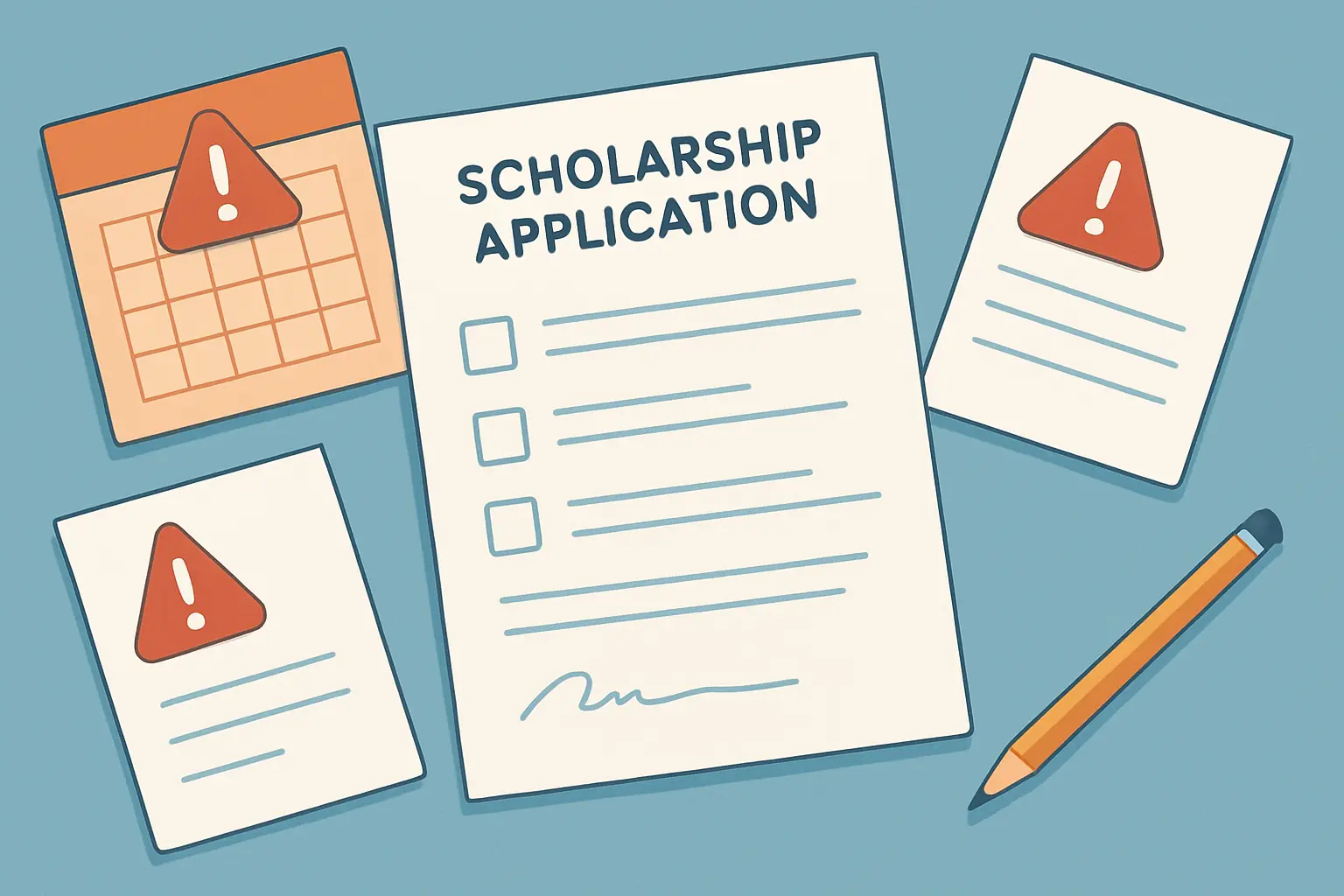
- Applying without a supervisor contact. Named fellowships almost always expect applicants to have identified a supervisor in principle. A generic application to an institution with no named academic contact signals that you have not done basic preparation.
- Reusing the same personal statement for every award. Gates Cambridge and DAAD have fundamentally different missions. An application that reads as a template is typically eliminated at first review.
- Missing the institutional pre-screening deadline. Marshall, Rhodes, and several other awards require a formal endorsement from your institution before the central deadline. Missing the internal date means you cannot apply that cycle regardless of your qualifications.
- Leaving the impact statement vague. Scholarship committees increasingly weight how your research will create change beyond academia. A proposal that does not address real-world impact leaves selection criteria unaddressed.
- Overlooking smaller, discipline-specific awards. Regional foundations, learned societies, and subject trusts fund PhD students with far lower competition than flagship programmes. These can be layered on top of a stipend to improve financial stability considerably.
Financial security during a PhD is not a secondary concern. Research on doctoral completion consistently shows that students with secure, full funding are substantially more likely to complete their degrees than those on partial or uncertain funding arrangements. The data and analysis in the guide to PhD dropout rates and completion statistics in 2026 underlines why targeting full funding from the outset — rather than supplementing a self-funded enrolment — is the higher-probability path to a completed doctorate.
If you are researching fully funded PhD scholarships in Asia — including programmes in Singapore, Japan, Hong Kong, and South Korea — the companion guide to PhD scholarships in Asia for 2026 covers those regional schemes in comparable depth.
Frequently Asked Questions
What GPA do you need for a PhD scholarship?
Requirements vary by scheme. The Marshall Scholarship requires a minimum GPA of 3.7 on a 4.0 scale. Gates Cambridge and Rhodes expect first-class or high upper-second-class undergraduate degrees, but evaluate GPA in institutional and disciplinary context. DAAD doctoral programmes require a relevant master’s degree without specifying a universal GPA threshold. If your undergraduate GPA is below 3.7, focus on government schemes and research-council routes where your research output, supervisor recommendation, and the quality of your research proposal carry more weight than a single numerical metric.
Can you apply for multiple PhD scholarships at once?
Yes — and you should. Applying to multiple schemes simultaneously is standard practice and is not viewed negatively by selection panels. Most scholarship rules require you to notify the awarding body if you receive a competing offer, and in some cases you must decline other awards upon acceptance. Practically, a strong application package — research proposal, personal statement, references — can be adapted across several schemes without starting from scratch each time, since the core research narrative stays the same while the framing shifts to match each award’s selection criteria.
Are PhD scholarships taxable income?
In the UK, UKRI stipends and most recognised scholarship stipends — including Rhodes, Gates Cambridge, and Commonwealth — are not subject to UK income tax or National Insurance, provided the money is used for educational purposes and you are not employed by the university. In the US, Fulbright and NSF GRFP stipends are generally taxable as fellowship income, though qualifying education expenses such as tuition may be deductible. Tax treatment varies significantly by country and individual circumstance; always consult your university’s student finance office or a qualified tax adviser before making assumptions about net income.
When should I start applying for PhD scholarships?
Most major scholarship deadlines fall 8–14 months before the programme start date, and institutional pre-screening deadlines add a further 6–8 weeks to the effective preparation window. If you want to begin a PhD in September or October 2027, identify your target scholarships by January 2026, make initial contact with potential supervisors by March 2026, and begin drafting application materials by June 2026. For UKRI DTP and CDT studentships, which typically close January–March for an October start, begin approaching supervisors 12 months in advance of your intended start date.
What is the difference between a PhD scholarship and a fellowship?
The terms are used interchangeably in the context of doctoral funding, but there are loose conventions. A scholarship typically covers costs — tuition, living expenses — awarded on academic merit or financial need. A fellowship often implies a more active role tied to a research project or disciplinary contribution: the NSF Graduate Research Fellowship, for example, is framed around your specific research project and your contribution to a field of science, not simply your academic record. In practice, what matters for applicants is whether the award is tenable at your target institution, covers the relevant costs, and does not impose restrictions that conflict with your research plans.
Build the Application Documents That Win Funding
A competitive research proposal and a compelling personal statement sit at the centre of every successful PhD scholarship application. Tesify is an AI-powered thesis and dissertation assistant built to help researchers structure academic arguments, develop literature-grounded framing, and maintain the clarity that scholarship panels reward — skills that transfer directly from thesis writing to fellowship applications. If you want to sharpen your research proposal or draft a stronger personal statement before your deadline, the Tesify AI dissertation writing assistant is a practical starting point. Free sign-up, no credit card required.